
Top White-Label Digital Banking Platforms in 2026
A 2026 buyer's guide to white-label digital banking platforms and software vendors. Compare Crassula, SDK.finance, Velmie, Mambu, Temenos, Thought Machine, Tuum and Finastra on model, licensing and speed.
What a white-label digital banking platform is
A white-label digital banking platform is software that lets a fintech, bank or brand launch a fully branded digital bank - accounts, cards, payments, an app and an admin console - without building the core from scratch. The vendor supplies the technology and, in many cases, the licensing partners; you supply the brand, the product decisions and the customers.
For the concept itself, see our digital banking guide and the broader white-label banking guide. This page is the shortlist: the leading digital banking software vendors in 2026, what each is genuinely good at, and how to pick the one that matches your licensing model and timeline.
Let's discuss your project and see how we can launch your digital banking product together
Request demoHow to choose a digital banking platform
Vendors in this space split into two camps, and choosing the wrong camp is the most expensive mistake in a digital banking project. Decide where you sit on these four axes first.
Core vendor vs orchestration platform
Some vendors sell the core banking engine (the ledger and product processor). Others sell the orchestration and product layer that sits on top of a core or a BaaS partner. You often need both, from different vendors.
Time to market
Tier-one cores take 18-36 months to implement. White-label product platforms put a branded app live in weeks on top of an existing licence. Be honest about which timeline your business can survive.
Backend control vs speed
Source-code and deep-core platforms give maximum control and a longer, costlier build. No-code and configurable platforms trade some low-level control for speed and a lower run cost. Match this to your engineering depth.
Licensing and region
Do you bring your own banking or EMI licence, or do you need a vendor with licensing partners? EU-native platforms differ sharply from US and tier-one global vendors on this.
The 2026 digital banking platform market
Demand is driven by profitable neobanks (Revolut, Nubank, Monzo and Starling all crossed into material profit) and by brands that want their own financial product. That has pulled in two kinds of vendor: modern cloud cores (Mambu, Thought Machine, Tuum) and white-label product platforms (Crassula, SDK.finance, Velmie) that turn a core or a BaaS partner into a branded bank. The right pick depends on whether your bottleneck is the core engine or the product and app on top of it.
The top white-label digital banking platforms in 2026
A working shortlist across product platforms and cloud cores. The first group ships a branded product fast; the second group provides the deep core underneath. Many real-world digital banks combine one from each.
| # | Platform | Type | Licensing | Sweet spot |
|---|---|---|---|---|
| 1 | Crassula | White-label product platform | Bring your own, or partner EMI/bank | Branded digital bank or wallet live in weeks |
| 2 | SDK.finance | White-label platform + source code | Bring your own licence | Teams that want source-code ownership |
| 3 | Velmie | White-label platform | Bring your own / partners | Modular neobank and wallet builds |
| 4 | Mambu | Cloud core (SaaS) | Bring your own licence | Composable cloud core for lenders and banks |
| 5 | Thought Machine | Cloud core | Bring your own licence | Tier-one banks, smart-contract ledger |
| 6 | Tuum | Cloud core | Bring your own licence | EU modular core, accounts to lending |
| 7 | Temenos | Core + digital banking suite | Bring your own licence | Established banks modernizing at scale |
| 8 | Finastra | Core + banking suite | Bring your own licence | Large institutions, broad product range |
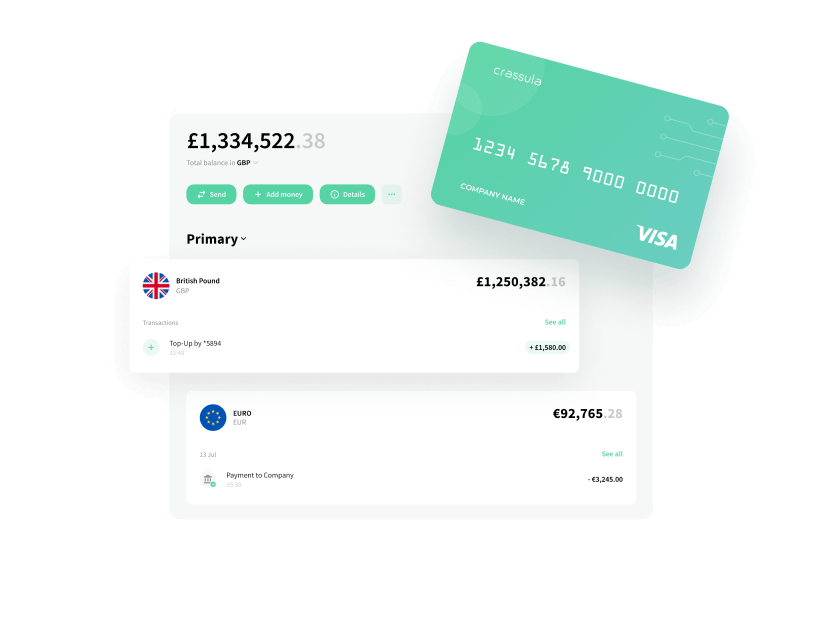
Crassula is a white-label product platform that turns a banking or EMI licence - yours or a partner's - into a branded digital bank: accounts and ledger, card issuing, payments routing, KYC and AML, crypto module and white-label web and mobile apps. The model is configuration over code, so a branded product goes live in weeks rather than the year-plus a deep-core build takes. More than 150 companies run on it. Where teams need it, the platform integrates with external cores and BaaS partners (ClearBank, Railsr, Modulr and others) rather than forcing a single backend.
SDK.finance offers a white-label platform available as a SaaS subscription or a source-code licence, which appeals to teams that want to own and extend the codebase in-house. It covers wallets, payments and core ledger functions for fintechs that bring their own licence.
Velmie provides a modular white-label platform for neobanks and wallets, with a component approach that suits teams that want to assemble specific pieces and integrate their own partners.
Mambu is a composable SaaS core popular with lenders and digital banks. Thought Machine's Vault uses a smart-contract approach to product definition and targets tier-one institutions. Tuum is an EU modular core spanning accounts, payments, cards and lending. These provide the engine; you still need a product and app layer on top, which is where a platform like Crassula or an in-house build comes in.
Temenos and Finastra offer broad core-plus-digital suites used by established banks. They cover an enormous product range and carry deep regulatory track records, at the cost of longer implementations and heavier commercial commitments than a white-label product platform.
The honest framing: if your goal is a branded digital bank or wallet live this quarter, a white-label product platform like Crassula is the fastest route, and it still integrates external cores and partners when you need deeper backend control. If you are a large institution replacing a tier-one core, Temenos, Thought Machine or Mambu belong on the shortlist, with a product layer added on top.
How Crassula fits
Crassula sits in the product and orchestration layer: white-label web and mobile apps, a real-time ledger, KYC and AML, card issuing, payments routing and an admin back office, on top of your own licensed entity or one of its BaaS partners. The result is a branded digital bank in weeks, on a stack that scales and that connects to external cores where a deeper backend is required.
See the digital banking guide for the concept, the white-label banking guide for the model, or the challenger bank and ClearBank solutions for live launch paths. The white-label UI feature shows what ships branded out of the box.
FAQ
There is no single best - it depends on whether your bottleneck is the core engine or the product on top of it, and on your licensing and timeline. For a branded digital bank or wallet live in weeks, white-label product platforms like Crassula lead. For source-code ownership, SDK.finance is an option. For a modern cloud core under a larger build, Mambu, Thought Machine and Tuum are strong. For tier-one modernization, Temenos and Finastra. Match the vendor to your camp before comparing features.
A core banking system is the engine - the ledger, product processor and transaction handling. A digital banking platform is the product and experience layer: onboarding, apps, card and payment journeys, admin. Cores like Mambu or Thought Machine provide the engine; platforms like Crassula provide the branded product on top, often over a core or a BaaS partner. A complete digital bank usually needs both, which is why many launches pair a cloud core with a product platform.
With a white-label product platform on top of an existing licence, a branded MVP can go live in six to twelve weeks, scaling to a few months for multi-currency, crypto or complex compliance. A deep-core implementation runs 18-36 months, and a full from-scratch build with your own licence takes years. The fastest path for a new brand is a product platform over a BaaS partner or an existing licence, with a deeper core added later if scale demands it.
Not always. Core vendors and source-code platforms generally expect you to bring your own banking or EMI licence. Product platforms like Crassula can run on your own licensed entity or plug into a BaaS partner (ClearBank, Railsr, Modulr and others), so you can launch under a partner's licence and upgrade to your own once you scale. Your licensing route is one of the first things to settle, because it shapes which vendors are even relevant.
It depends on the platform. Configuration-first platforms trade some low-level control for speed, but the better ones, including Crassula, expose APIs and integrate external cores and BaaS partners, so you are not locked into a single fixed backend. Source-code platforms give maximum control at the cost of owning maintenance. The practical question is not "maximum control in theory" but "enough control for your product, at a timeline and cost your business can afford" - for most new launches, a configurable platform with open APIs is the right balance.