

Multipass is a financial services provider offering global business accounts, multi-currency payments, and cross-border transaction solutions.
Read case study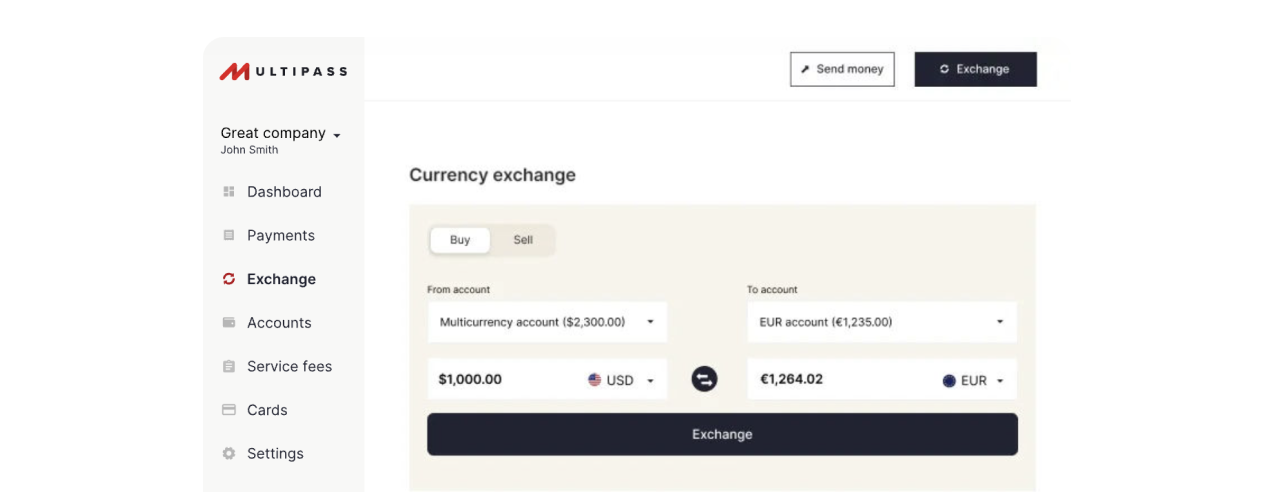
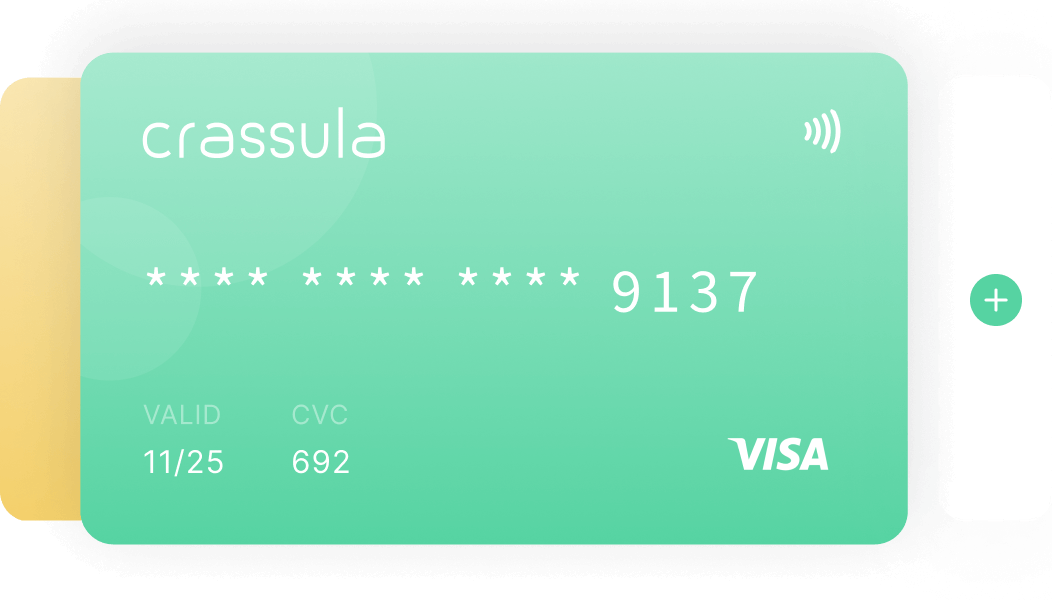
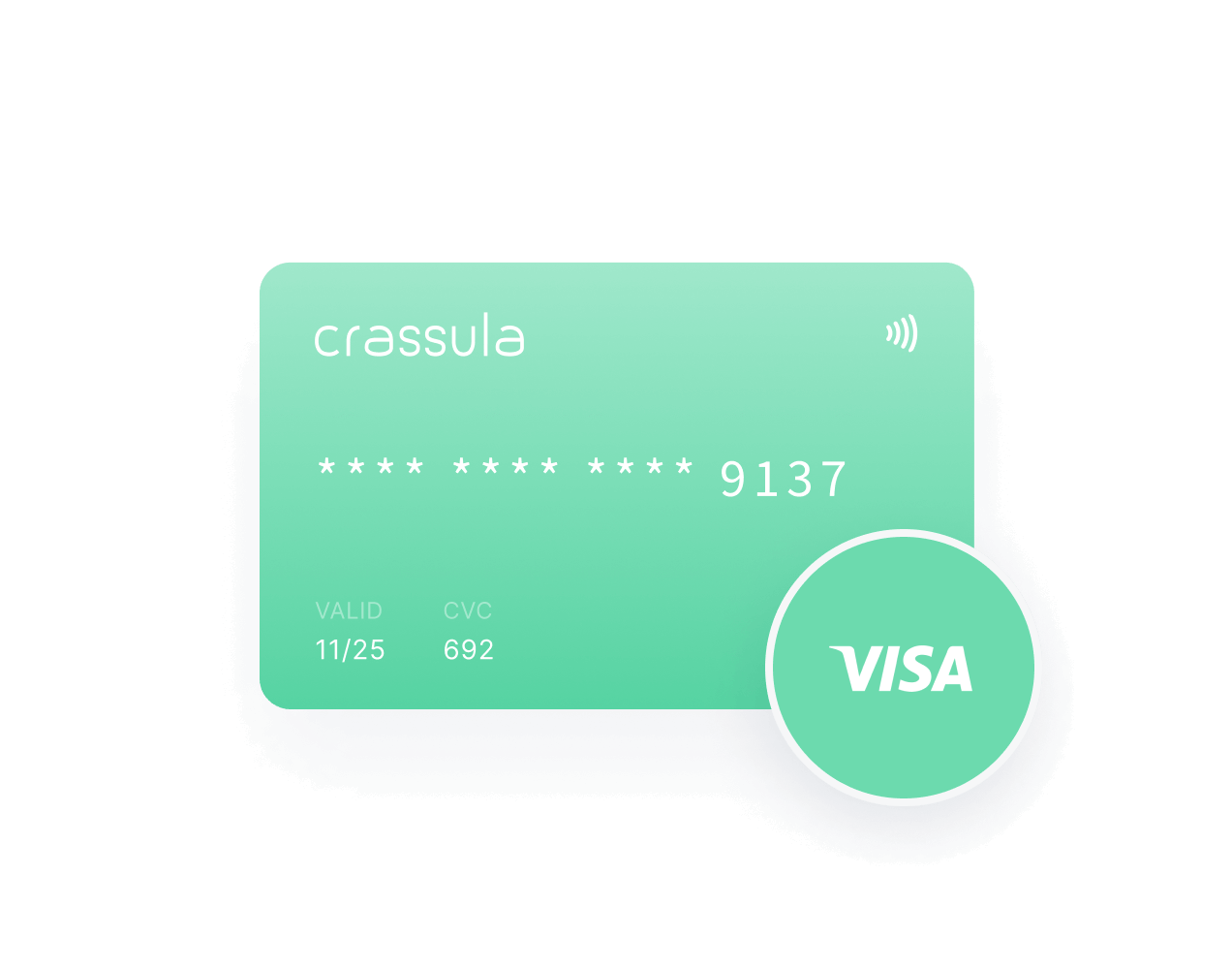
Launch branded virtual and physical Visa and Mastercard cards on Crassula's platform: several pre-integrated card issuers across the EU, UK and globally, Apple Pay and Google Pay tokenization, and the compliance stack wired in before the first card ships. You contract with the issuer that fits your program; Crassula runs the technology. Your brand, your economics, your program.


Multipass is a financial services provider offering global business accounts, multi-currency payments, and cross-border transaction solutions.
Read case study

Paysend & Crassula - a banking solution for international companies
Read case study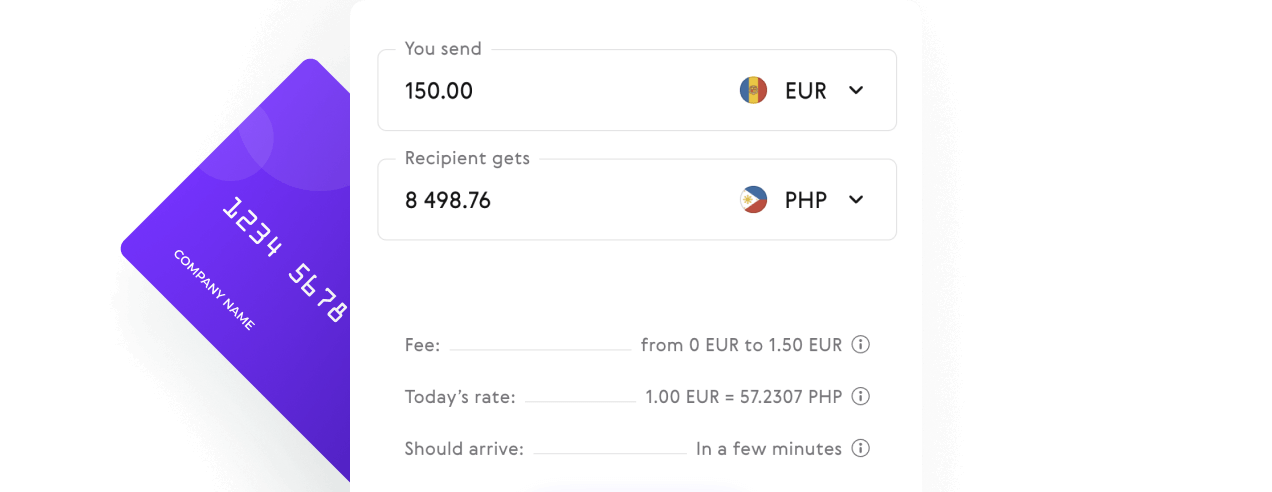

LuxPay is at the forefront of providing advanced financial services, designed to meet the needs of modern businesses and consumers alike.
Read case study

Wickie offers secure and scalable fiat and cryptocurrency payment solutions, providing users with digital wallets and seamless financial services across multiple platforms.
Read case study
Becoming a card issuer on your own means scheme membership, a BIN range, a processor, a card bureau, a tokenization service and a PCI DSS audit. Each is a separate negotiation, and the clock adds up.
Getting your own BIN range means becoming a Visa or Mastercard member: capital requirements, audits and a queue. Most programs never need to own this layer.
Storing and processing card data puts your whole stack in audit scope. Level 1 certification is a project of its own, and it never ends: it renews every year.
Processor, sponsor bank, card bureau, tokenization service, KYC provider: five contracts, five integrations, five points of failure - before you write a line of your own product.
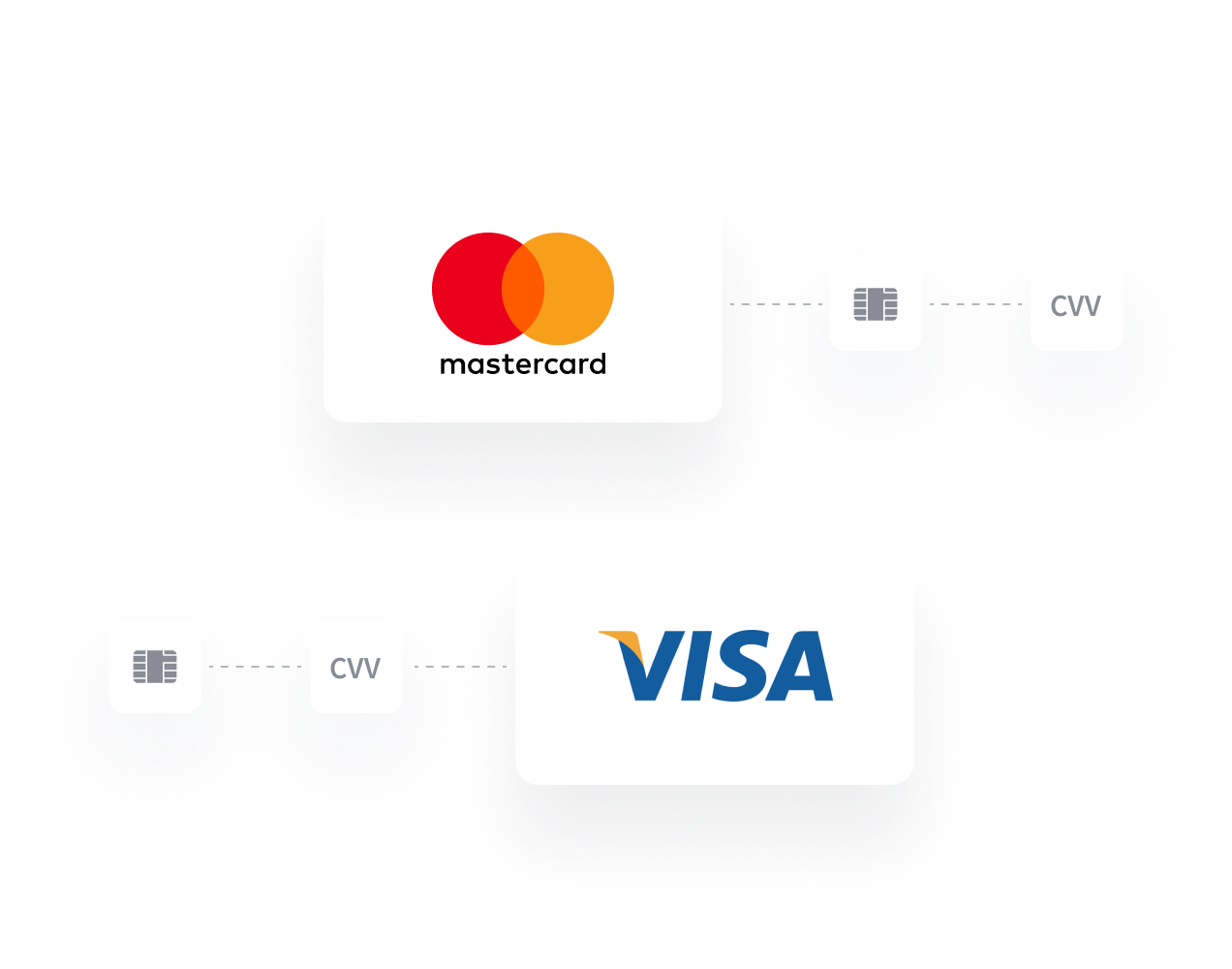
Several card issuers working in the EU, UK and globally, including Decta, are already connected to the platform. You contract with the issuer directly: they carry the licence and scheme membership, you control the product, brand and pricing.
Instant virtual issuance into Apple Pay and Google Pay; physical cards with your design through connected bureaus. A virtual card converts to plastic in one API call - no reissue, same account.
Card data is tokenized and lives inside PCI-certified infrastructure. The raw PAN never touches your servers, so your audit scope stays small.
Spend limits, merchant-category blocks, geography and velocity rules - configured per card or per segment from the admin console, without code changes.
KYC orchestration, AML monitoring, SCA and 3DS2 are part of the platform, not a retrofit. Compliance tooling is live before the first card is issued.
Cardholders order, freeze and manage their cards in your branded web, iOS and Android apps. Self-service card management cuts your support volume from day one.
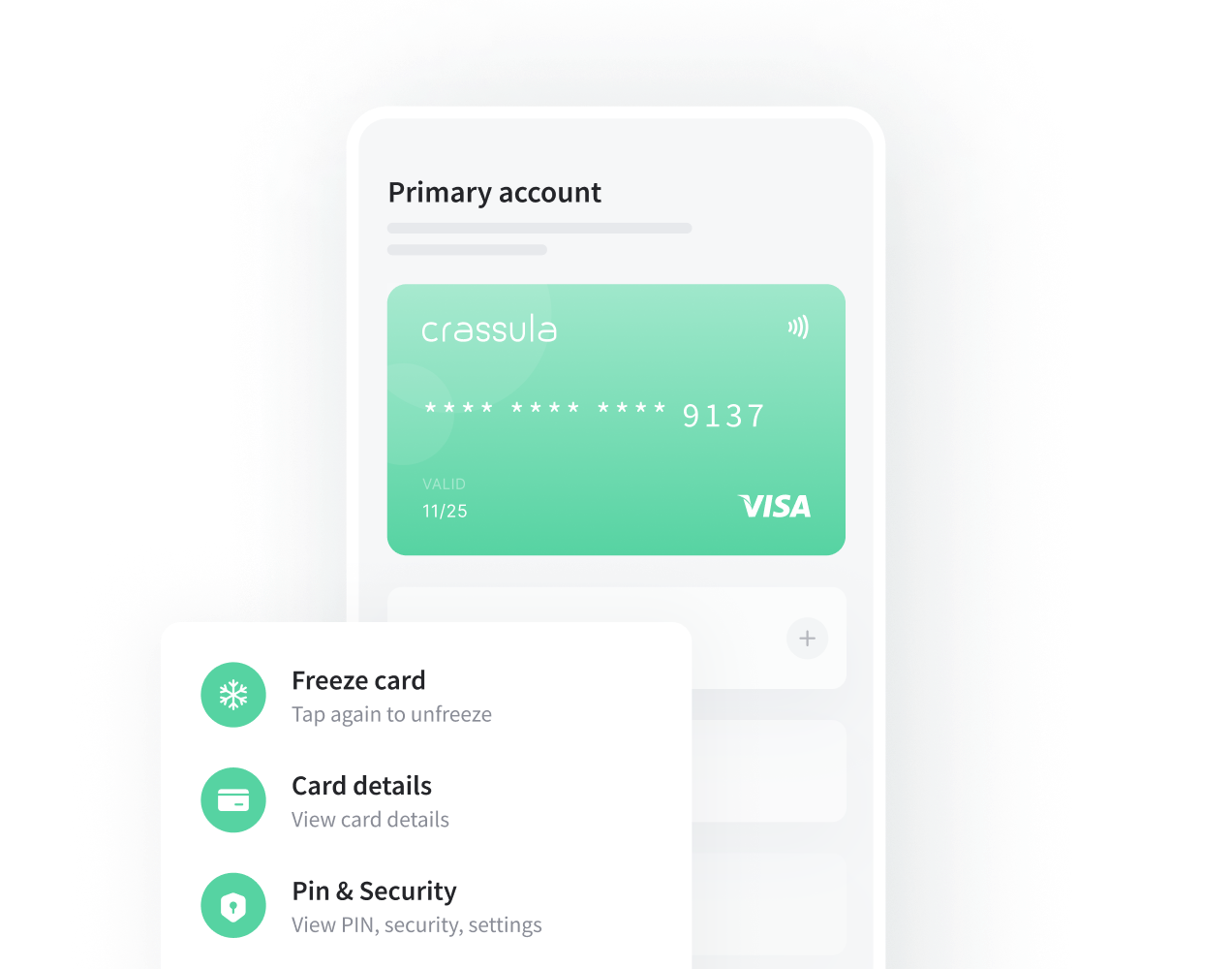
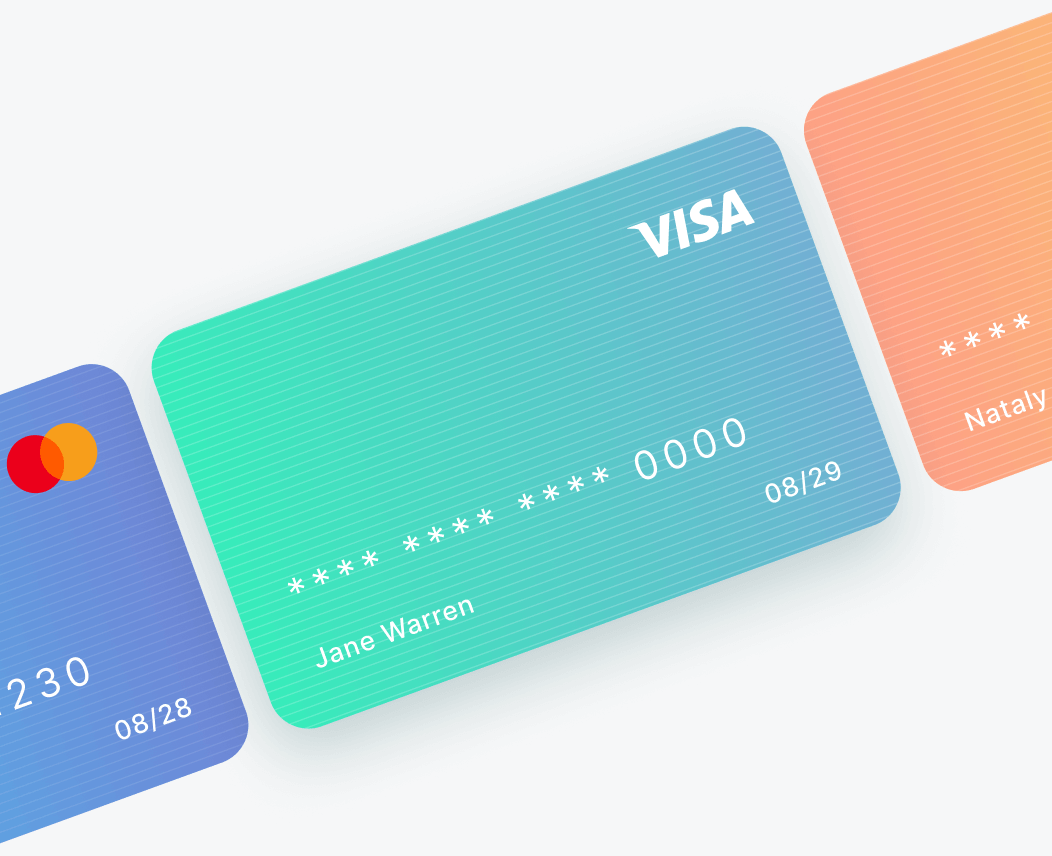
Issue virtual cards instantly and ship physical plastic with your own design through connected bureaus. Personal, business and single-use cards all sit on the same account and ledger.
 Instant virtual issuance into Apple Pay and Google PayA virtual card converts to plastic in one API callVisa and Mastercard through pre-integrated issuers
In your branded web, iOS and Android apps, cardholders order a card, freeze it, reveal details and set their PIN in a couple of taps. Self-service card management cuts your support volume from day one.
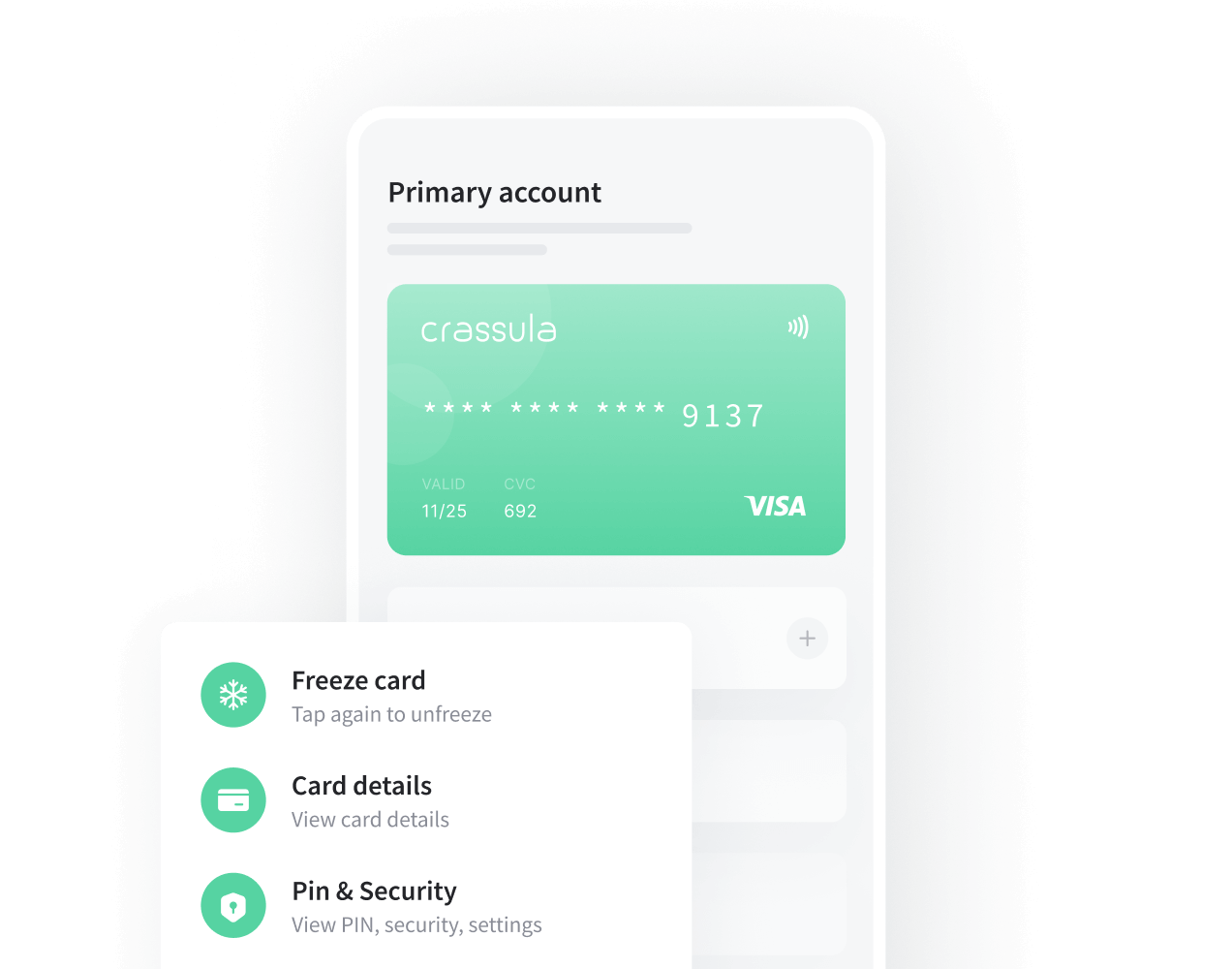
Card delivery, limits, statuses and spend rules live in the Crassula Back-Office Dashboard, the same place your accounts, payments and compliance already sit. Set merchant-category blocks, geography and velocity rules per card or per segment without touching code.
KYC orchestration, AML monitoring, SCA and 3DS2 are part of the platform, not a retrofit. Card data is tokenized inside PCI-certified infrastructure, so the raw card number never touches your servers and your audit scope stays small.

Ship a debit card alongside accounts and payments from day one. The card account, ledger and branded app come from the same platform, so there is nothing to stitch.
Give SME clients business card programs with flexible spending and expense control: virtual cards per employee, per vendor or per subscription, with hard limits and merchant locks.
Give users a card that spends crypto-linked balances anywhere Visa or Mastercard is accepted, with fiat settlement handled underneath.
Pay sellers and couriers onto instantly issued virtual cards instead of slow bank transfers. Funds arrive the moment the job clears.
Every transaction on your card earns interchange for the issuing side; your share of it is set in your direct agreement with the card issuer. On Crassula, you configure issuance, transaction and maintenance fees per card product and keep your client pricing under your control.
No black-box platform pricing. You see the fee structure before you sign, and you adjust your own tariffs from the admin console as your program grows.
If your current processor is slow to change or holds your roadmap hostage, Crassula migrates existing card programs onto its stack: card accounts, balances and rules move in staged waves, and open APIs mean you are never locked in again.