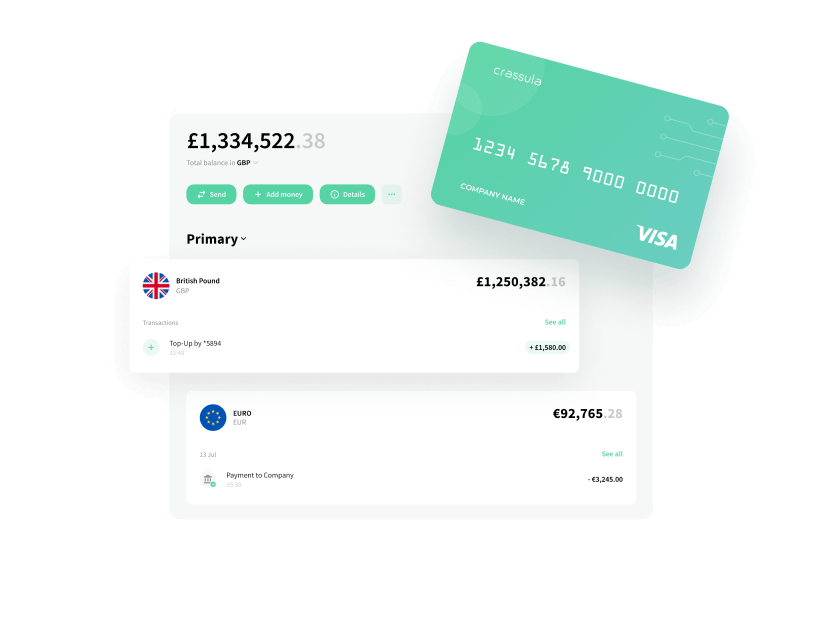

White Label Banking in 2026: Providers, Platforms and How It Works
A practical guide to white-label banking: what it is, how it differs from BaaS, what a modern platform includes, how virtual IBANs work, and how to evaluate providers and launch fast.
What is a white-label banking solution?
A white-label banking solution is a ready-built, unbranded financial platform developed by a specialist provider that another business purchases, brands, and launches under its own name. The provider builds and maintains the technology; the client owns the customer relationship and the brand.
The model is not new - consumer goods companies have sourced white-label products for decades - but it has transformed financial services over the last several years. A business that would once have needed two to three years and tens of millions of euros to build a digital banking product can now reach customers in a matter of months, at a fraction of the cost, using a pre-validated stack.
Pre-built infrastructure
Accounts, payments, cards, KYC, and admin tooling developed and battle-tested by the provider before you sign.
Your brand, front and back
Logo, colour palette, app name, domain - the end customer sees your identity, not the vendor's.
Regulatory coverage
Providers either hold the licence themselves (EMI/PI) or connect you to a licensed partner, so you operate compliantly from day one.
White-label banking is used by fintech startups building neobanks, established brands adding embedded finance, payment institutions extending their product range, and traditional banks launching digital sub-brands without disrupting their existing systems.
Let's discuss your project and see how we can launch your digital banking product together
Request demoWhite-label vs build vs BaaS - decision matrix
Three routes lead to a branded banking product. Understanding where each wins - and where it fails - is the most important decision a product team makes before writing a line of code or signing a contract.
| Dimension | Build in-house | BaaS (API-only) | White-label platform |
|---|---|---|---|
| Time to market | 2-4 years | 6-18 months | 6 weeks - 6 months |
| Upfront cost | Very high (€5M+) | Medium (API fees + dev) | Low to medium (setup + licence) |
| Customization | Unlimited | API-level only | High - brand, flows, config |
| What you receive | Everything you build | Regulated capability, raw API | Full application - front-end, back-end, admin |
| Engineering team needed | Large (20+ engineers) | Medium (5-15 engineers) | Small (2-5 engineers for integration) |
| Ongoing maintenance | 100% your cost | Shared | Provider carries infrastructure burden |
| Best fit | Tier-1 bank, unique business model | Developers embedding a single feature | New entrant, speed-first, brand-led launch |
BaaS vs white-label is a common source of confusion. A BaaS provider gives you raw, regulated API capabilities - account opening, payment rails, card issuing - that your own engineers assemble into a product. A white-label platform gives you a working product from day one: mobile app, web portal, admin console, KYC flows. You brand it and configure it; you do not build it. The BaaS route offers more flexibility; the white-label route offers far less engineering burden and a much faster path to launch.
What a white-label fintech platform includes
A mature white-label fintech platform is not a single product - it is a modular stack covering every layer a banking product needs. The following capability areas are standard on credible platforms in 2026.
Account management
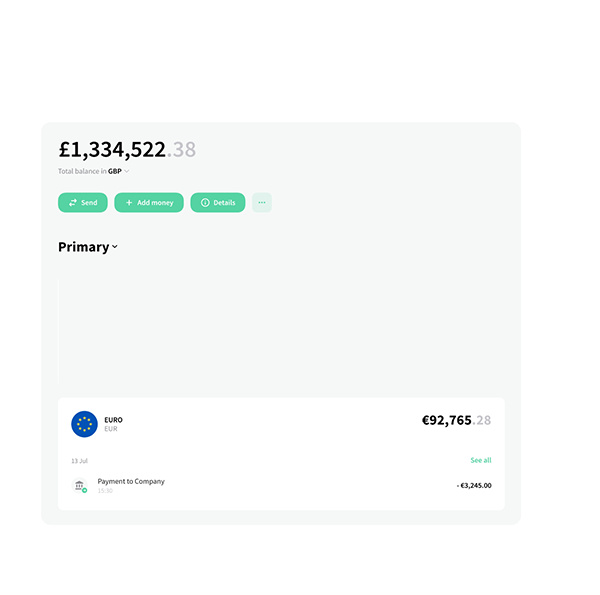
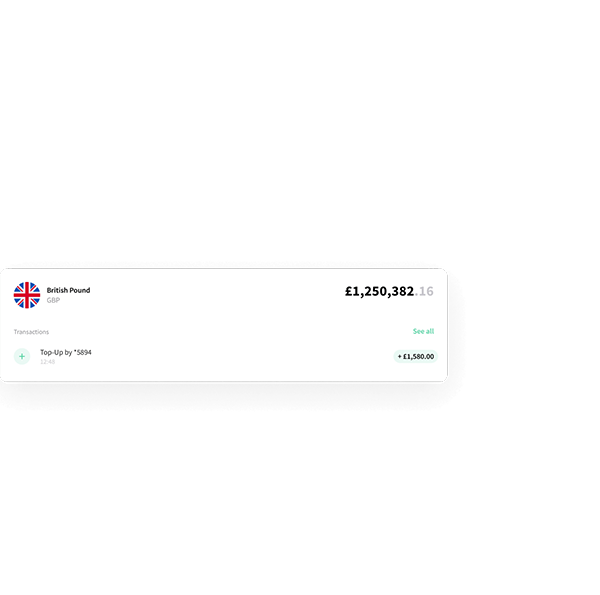
Multi-currency accounts, virtual IBANs, balance management, transaction history, interest accrual, sub-account structures for business customers.
Card issuance
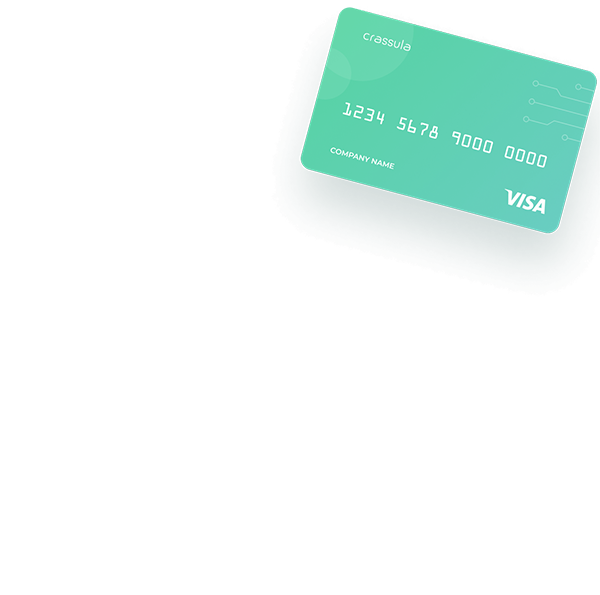
Physical and virtual debit cards on Visa or Mastercard, card controls (freeze, spend limits, merchant category blocks), Apple Pay and Google Pay tokenization.
Payments
SEPA credit transfer and direct debit, SWIFT international wires, FX conversion, internal ledger transfers, payment scheduling and recurring instructions.
KYC and compliance
Automated identity verification, liveness checks, document scanning, AML screening, sanctions monitoring, PEP/adverse media checks, ongoing transaction monitoring.
Client apps
White-label iOS and Android apps, responsive web portal - both configurable with your brand assets. Some platforms also provide source code for deeper UI customization.
Admin console
Back-office dashboard for customer management, transaction monitoring, fee configuration, limits, reports, and compliance case management.
Beyond the core modules, advanced platforms layer on crypto wallet and custody support, loan management, embedded lending, and open banking connectivity. The key differentiator between providers is not whether features exist on a feature list - it is how deeply each module is integrated, how configurable it is without custom code, and how well it holds up under real transaction volumes.
Security and compliance infrastructure is non-negotiable: PCI DSS Level 1 certification for cardholder data, ISO 27001 for information security management, GDPR-compliant data handling with clear data processor agreements. Ask any potential provider for their current certificates, not their roadmap.
White-label bank accounts and virtual IBANs explained
The bank account is the centrepiece of most white-label banking products. In practice, "bank account" in the context of a white-label fintech platform usually means a virtual IBAN - a payment account held at an Electronic Money Institution (EMI) or a partner bank, accessible via the same SEPA and SWIFT rails as a traditional account.
A virtual IBAN looks and behaves like a standard IBAN from the customer's perspective: it receives incoming transfers, can send outgoing payments, and appears on bank statements. The distinction is that the account is typically held at the EMI level, not at a deposit-taking bank, which means funds are safeguarded (ring-fenced) rather than covered by a deposit guarantee scheme like the EU's €100,000 Deposit Guarantee Scheme (DGS). Responsible providers explain this difference clearly to end customers.
| Feature | Traditional bank account | White-label virtual IBAN (EMI) |
|---|---|---|
| IBAN format | Standard country IBAN | Standard country IBAN (often LT, EE, GB, MT) |
| SEPA payments | Yes | Yes |
| SWIFT payments | Yes | Yes (via correspondent) |
| Deposit protection | Up to €100,000 (EU DGS) | Safeguarded funds (not DGS-covered) |
| Multi-currency | Limited (varies by bank) | Yes - 30+ currencies common |
| Open time | Days to weeks | Minutes to hours (digital KYC) |
| API access | Via open banking (PSD2) | Native API, full programmatic control |
For most fintech and embedded finance use cases - business payments, expense management, travel wallets, driver or gig-worker accounts - a virtual IBAN is entirely sufficient. The use cases where a full deposit-taking bank licence matters are interest-bearing savings and lending, which require either a banking licence or a partnership with a licensed bank.
Multi-currency capability is one of the strongest advantages of virtual IBANs. A single platform can maintain balances in EUR, GBP, USD, and 30+ additional currencies, with internal FX conversion at competitive rates - something legacy banks rarely offer without significant fees or minimum balances.
Choosing a white-label banking provider - evaluation checklist
The provider you choose becomes a long-term infrastructure partner, not just a vendor. A rushed decision here is far more expensive to fix than overspending on due diligence before signing. The following checklist covers the dimensions that matter most.
| Criterion | What to look for | Red flags |
|---|---|---|
| Regulatory status | EMI or PI licence from a credible regulator (FCA, BaFin, Bank of Lithuania, CBL, etc.); or confirmed licensed partner access | Vague claims about "regulatory coverage"; no named licence holder |
| Feature completeness | Accounts, cards, payments, KYC, apps - all live and customer-referenced, not roadmap | "Coming soon" on core features; demo environment only |
| Technology stack | Cloud-native, API-first, documented uptime history (99.9%+) | Legacy monolith, manual processes for account operations, no SLA |
| Customization depth | Full brand control over apps and web portal; configurable fee logic, limits, workflows without custom code | Fixed UI templates; any brand change requires a development project |
| Integration architecture | Open, documented REST/webhooks API; sandbox environment; clear connector library | Closed system; no sandbox; integrations only through provider's professional services |
| Client references | Live, named customers with comparable scale and geography | Only anonymous case studies; all clients in one small market |
| Support model | Dedicated account manager; defined SLAs for critical issues (P1 response <1h); 24/7 for payment failures | Ticket-only support; no named contact; SLAs only in small print |
| Data ownership | Clear DPA stating you own customer data; provider is data processor only; GDPR-compliant data residency | Ambiguous data ownership; no DPA; data stored outside your jurisdiction without consent |
| Pricing transparency | Clear per-account or per-transaction pricing; setup fee; no hidden volume penalties | Pricing only revealed after NDA; variable fees with no ceiling |
Ask for a live sandbox and run at least one end-to-end test scenario - account opening, card issuance, SEPA transfer - before committing. Providers who cannot give you a working sandbox within two weeks of a signed NDA are telling you something important about their operational capability.
Notable providers in the European market include Mambu (core banking focus, no own licence), Solaris (German banking licence, BaaS-oriented), RNDpoint (white-label neobank software), and Crassula (full white-label platform with payment network access). Each occupies a different position on the build-vs-configure spectrum; the checklist above helps you match provider capability to your specific launch requirements.
Business case - speed to market and cost
The financial case for a white-label approach rests on two variables: time saved and capital not spent. Both are material enough that even businesses with significant engineering capacity choose the white-label route when speed matters.
Build in-house
- Engineering team: 15-25 people over 2-3 years
- Infrastructure, security, compliance tooling: €500K+/year
- Card programme setup and BIN sponsorship: €100K-250K
- KYC/AML vendor integrations: €100K-200K
- Regulatory readiness (pen tests, audits, licensing): €200K-500K
- Total 3-year cost: €5M-15M+
White-label platform
- Platform setup and branding: €30K-150K
- Integration engineering (small team, 2-3 months): €50K-150K
- Monthly platform fee: €5K-30K/month depending on scale
- Compliance and licensing support: included or fractional
- Time to first live customer: 6 weeks to 6 months
- Total year-one cost: €100K-500K
The cost gap closes over time - a large platform at scale will eventually justify the build cost of its own stack. But for the first three to five years of operation, a white-label platform converts a capital expenditure problem into an operational expenditure model where cost scales with revenue.
Speed has an asymmetric value. Being first in a segment - driver accounts, green banking, business accounts for a specific sector - is worth far more than the engineering time saved. The businesses that launched embedded finance products in 2021-2022 using white-label platforms captured market positions that new entrants now struggle to displace even with better technology.
Real businesses using the white-label model include neobanks (Paysend, LuxPay, MultiPass), logistics and gig-economy platforms embedding driver wallets, and financial institutions launching digital sub-brands. The pattern is consistent: white-label entry, learn in market, then selectively invest in proprietary differentiation once the customer base justifies it.
Crassula as a white-label banking platform
Crassula provides a complete white-label financial platform built for regulated launches. The platform is live with 150+ companies across Europe and beyond, covering the full product range a digital bank or payment business needs.
Crassula Core
White-label digital banking platform: multi-currency accounts, virtual IBANs, ledger management, payment orchestration, and product configuration via admin console.
Crassula Cards
End-to-end card issuing and programme management: physical and virtual cards on Visa/Mastercard, card controls, spend analytics, and 3DS handling.
Crassula Apps
White-label iOS and Android apps and responsive web portal - fully branded with your identity, configurable without a dedicated mobile team.
Crassula Hub
Unified banking and payment API connecting your product to SEPA, SWIFT, card networks, and KYC/AML providers through a single integration point.
The platform is built on a cloud-native, API-first architecture. Clients connect to a licensed EMI or payment institution through Crassula's network, or bring their own licence. The typical timeline from signed agreement to first live transaction is 6-12 weeks for a standard configuration.
Crassula also offers Crassula Crypto for clients adding compliant crypto wallet and custody capabilities to their banking product - a growing requirement as customers expect fiat and digital assets in a single app. All modules are composable: you launch with what you need now and activate additional capabilities as the business grows.
FAQ
White-label banking is a model where a specialist provider builds and operates a financial platform - accounts, payments, cards, KYC - that another business brands and sells as its own product. The end customer sees the client's brand; the provider runs the infrastructure and, in many cases, holds the regulatory licence. It allows businesses to launch banking products in weeks rather than years, without building the underlying technology from scratch.
Banking-as-a-Service (BaaS) providers expose raw regulated capabilities via APIs - account opening, card issuance, payment rails - that your engineering team assembles into a product. A white-label banking platform delivers a finished, branded product: mobile app, web portal, admin console, compliance flows. BaaS gives you more control and requires more engineering; white-label gives you a working product faster with much less technical overhead. In practice, many white-label platforms use BaaS providers under the hood, but the client does not have to manage that complexity directly.
A full-featured white-label fintech platform covers: multi-currency account management with virtual IBANs; physical and virtual card issuance (Visa/Mastercard); domestic and international payment rails (SEPA, SWIFT); automated KYC/KYB onboarding with AML screening; branded mobile apps (iOS/Android) and web portal; back-office admin console with customer management, transaction monitoring, and fee configuration; and open API connectivity for integration with your existing systems. Advanced platforms add crypto wallets, lending modules, and open banking connectivity.
A white-label bank account is a payment account opened at an Electronic Money Institution (EMI) or partner bank, issued under your brand. In practice these are virtual IBANs - they use a standard IBAN format and connect to SEPA and SWIFT rails just like a traditional bank account, so customers can send and receive payments normally. The key difference from a deposit-taking account is that funds are safeguarded (ring-fenced) rather than covered by the EU Deposit Guarantee Scheme (€100K per depositor). For most fintech use cases - business payments, expense management, gig-worker accounts - this distinction does not affect the customer experience.
Evaluate providers on: (1) regulatory status - do they hold a real EMI/PI licence or connect you to a named licensed partner? (2) Feature completeness - are accounts, cards, payments, and KYC all live with customer references, not just on the roadmap? (3) Technology - cloud-native, documented API, 99.9%+ uptime SLA, working sandbox? (4) Customization - full brand control over apps and workflows without custom development projects? (5) Data ownership - clear Data Processing Agreement, you own customer data, GDPR-compliant storage? (6) Pricing - transparent per-account or per-transaction model, no hidden fees? Ask for a live sandbox and run an end-to-end test before signing.
A standard white-label configuration - branded accounts, virtual IBANs, card programme, SEPA/SWIFT payments, KYC flows - typically goes live in 6 to 12 weeks from a signed agreement. More complex configurations with custom integrations, additional currencies, or embedded lending modules run 3 to 6 months. This compares to 18-36 months for an in-house build and 6-18 months for a BaaS-only route where you assemble the product yourself from raw APIs.