
Private Banking Software in 2026: Capabilities and Buyer's Guide
A practical guide to private banking software in 2026: what it is, core capabilities for HNW and UHNW clients, wealth-specific requirements, compliance obligations, and how to choose between building, buying, or white-labelling.
What private banking software is and who uses it
Private banking software is a technology platform built to serve high-net-worth (HNW) and ultra-high-net-worth (UHNW) clients. It goes well beyond the current-account and payment rails that power retail banking. A private banking platform must handle complex, multi-asset portfolios, deliver personalised relationship management at scale, and meet the stricter compliance obligations that come with managing large wealth.
The global wealth management software market was valued at roughly USD 10.5 billion in 2026 and is growing at around 11-12% per year. That growth is driven by two pressures at once: HNW clients now expect the same digital fluency they get from consumer apps, and relationship managers need better tools to handle complexity without adding headcount.
Private banks
Full-service institutions offering banking, investment advisory, and credit to HNW clients under a single relationship.
Family offices
Single or multi-family offices managing consolidated wealth across generations, often with alternative assets dominating the portfolio.
Wealth arms of neobanks
Digital-first fintechs adding a private banking tier - premium accounts, investment access, and concierge service - on top of a core banking stack.
The defining characteristic of a private banking platform is that the relationship manager (RM) is as much a user as the client. Good software gives RMs a 360-degree view of their book, automates routine tasks, and surfaces opportunities - so the human relationship becomes more valuable, not less.
Let's discuss your project and see how we can launch your digital banking product together
Request demoCore capabilities: what the platform must do
Private banking software covers a wider capability surface than retail or corporate banking. These are the functional areas that any serious platform must address:
| Capability area | What it does | Why it matters for HNW |
|---|---|---|
| Portfolio management | Real-time position tracking, P&L, benchmarking, rebalancing | Clients hold multi-asset, multi-custodian portfolios; one view is non-negotiable |
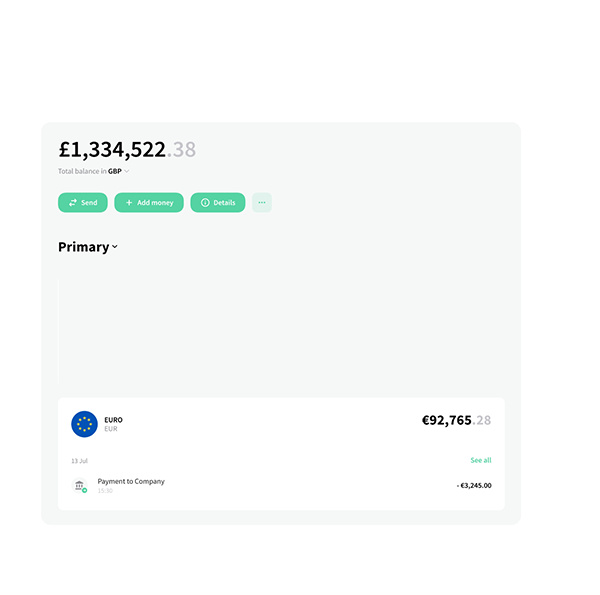
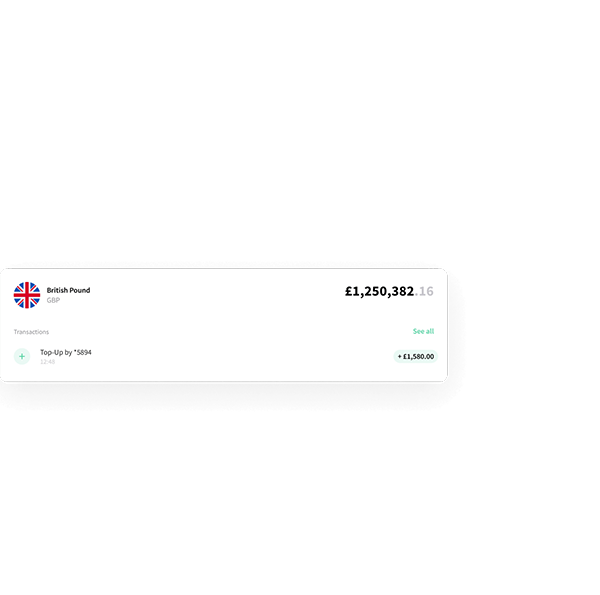
| Multi-currency accounts | Hold and transact in 30+ currencies, FX conversion, hedging tools | HNW individuals are internationally mobile with cross-border assets and liabilities |
| Client reporting | Consolidated statements, performance attribution, tax-lot reporting | Regulators and clients expect detailed, accurate, branded reports |
| Relationship management (CRM) | Interaction log, task management, next-best-action, document vault | RMs manage dozens of HNW relationships; data-driven prompts prevent drops |
| Digital onboarding and KYC | KYC profile creation, PEP/sanctions screening, eIDAS-compliant e-sign | Private banking onboarding is paper-heavy by tradition; digitising it cuts weeks to days |
| Lending and collateral | Lombard loans against portfolio, LTV monitoring, margin calls | Credit against securities is a core revenue line for private banks |
Research from 2025-2026 shows that 45% of wealth managers now use AI-driven analytics for portfolio construction - the expectation from new clients is that smart recommendations are built in, not bolted on.
Wealth and HNW-specific requirements: custody, alternatives and reporting
Retail banking software handles current accounts, cards, and maybe basic investments. Private banking goes further into territory that most off-the-shelf platforms do not cover well.
Alternative asset administration is one of the sharpest differences. Private equity, real estate, hedge fund interests, private credit, and structured products now make up roughly 25% of the average UHNW portfolio. The platform must be able to ingest capital call schedules, book illiquid valuations, and include these holdings in consolidated reporting - not just link to a spreadsheet elsewhere.
Custody and asset safekeeping requires the platform to maintain accurate records of securities held at one or more custodians. For a private bank operating across jurisdictions this typically means connecting to multiple custodians via standard formats (ISO 20022, SWIFT MT) and reconciling positions daily.
Client reporting at the HNW level is a product in itself. Clients expect:
- Consolidated views across custodians, currencies, and asset classes
- Performance attribution down to individual security level
- Tax reporting formatted for the client's home jurisdiction
- Branded, white-labelled statements that look like the bank's own
Digital client experience is now a competitive differentiator. UHNW clients who run their own businesses are accustomed to real-time dashboards. A private banking app that only shows end-of-day balances is a credibility problem. The best platforms offer a hybrid advisory model: self-service portfolio access for clients who want it, with the RM a click away.
Compliance and regulatory obligations
Private banking carries a heavier compliance burden than retail banking for one straightforward reason: the clients are politically exposed persons (PEPs), cross-border wealth holders, and sometimes both. Regulators apply enhanced due diligence (EDD) requirements to these relationships, and the software must support the resulting workflows.
AML / KYC and EDD
Ongoing screening of clients against PEP and sanctions lists, automated risk-score updates when circumstances change, and documented EDD reviews at defined intervals. FATF Recommendations 10, 12, and 22 apply directly.
MiFID II / MiFIR suitability
Investment recommendations must be documented as suitable for the client's risk profile, objectives, and knowledge. The platform must capture and store these assessments and generate audit-ready evidence.
FATCA and CRS reporting
US persons and cross-border account holders trigger FATCA filing obligations; the OECD Common Reporting Standard requires annual reporting to the tax authority on non-resident clients. Both require the platform to classify and flag accounts automatically.
DORA (EU) - operational resilience
Under DORA, which has applied since January 2025, EU-regulated institutions must prove ICT resilience, test business-continuity arrangements, and manage third-party provider risk. Private banking software is in scope as a critical ICT service.
The compliance layer is not optional - it is the foundation on which private client trust rests. A platform that requires heavy manual workarounds for suitability recording or CRS classification will eventually become a risk in itself.
Build vs buy vs white-label for private banking
The three paths to a private banking platform look very different in cost, time, and control:
| Approach | Typical timeline | Capital cost | Best for | Main risk |
|---|---|---|---|---|
| Build in-house | 24-48 months | USD 5-20M+ | Large banks with unique requirements and engineering capability | Scope creep, compliance gaps, long time to revenue |
| License a specialist system | 12-24 months (implementation) | USD 500K-3M+ licence + implementation | Established institutions replacing a legacy core | Vendor lock-in, heavy implementation overhead |
| White-label platform | Weeks to 3 months | Low setup, usage-based fees | Neobanks, fintechs adding a premium tier, regional wealth managers | Less customisation headroom; must evaluate compliance coverage carefully |
For most new entrants and growing fintechs, the white-label path makes financial sense. Deploying a white-label private banking platform can be done in weeks rather than the 12-18 months required for bespoke development. The trade-off is that the vendor's compliance certifications and feature roadmap must align with your target jurisdiction and client segment - so due diligence on the provider matters.
One practical consideration: look for platforms that separate the client experience layer (app, portal, reporting) from the core ledger. That separation lets you rebrand and extend the client-facing product without being locked into a single underlying technology.
Where Crassula fits in private banking
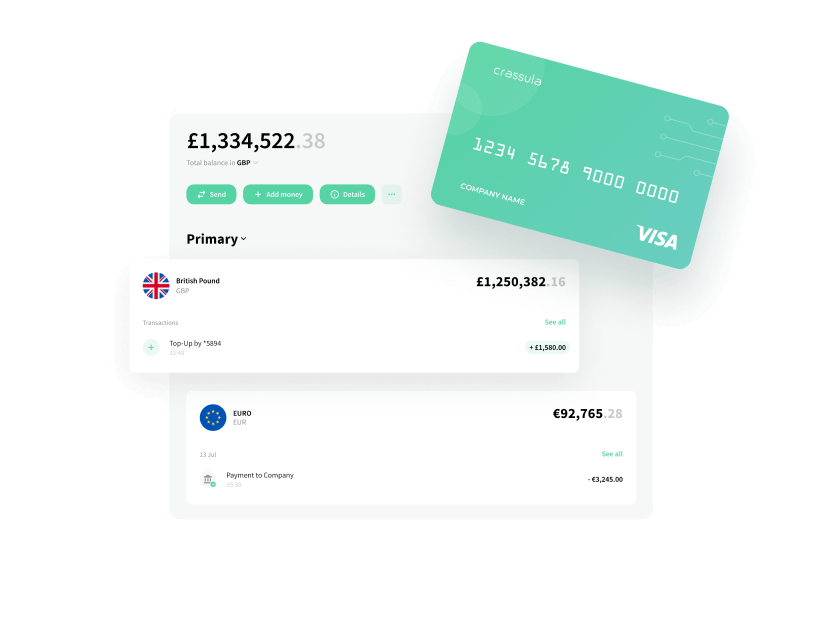
Crassula is a white-label banking platform designed for institutions that want to launch or extend digital financial products without building from scratch. For private banking and premium wealth-adjacent products, Crassula provides the foundational layer - multi-currency accounts, IBAN issuance, card programs, and compliance workflows - on top of which a team can build the wealth-specific experience.
This is particularly relevant for:
- Neobanks and digital fintechs adding a premium or private-client tier to an existing product
- Regional wealth managers who need a modern digital channel without the cost of enterprise wealth software
- Payment institutions looking to offer multi-currency accounts and card products to business owners and HNW clients
The Crassula stack covers multi-currency wallets, SEPA and SWIFT payment rails, virtual and physical card issuance, and a KYC/AML workflow. These are the same building blocks a private banking product is built on - the difference is the client experience layer and the wealth-specific modules (portfolio reporting, alternative asset admin) that sit on top. For teams that want to move fast and control their own brand, the white-label path is a practical starting point.
If you want to understand how Crassula's banking infrastructure supports premium client products, the white-label banking guide covers the provider evaluation process in detail.
FAQ
Private banking software is a technology platform purpose-built to serve high-net-worth and ultra-high-net-worth clients. It combines portfolio management, multi-currency accounts, client reporting, relationship management (CRM), digital onboarding, and compliance tools into a single system. Unlike retail banking software - which focuses on current accounts, payments, and consumer credit - a private banking platform must handle complex multi-asset portfolios, alternative investments, and the stricter regulatory requirements that apply to managing large wealth.
The core difference is complexity and client type. Retail banking software handles millions of simple accounts: current accounts, savings, consumer loans. Private banking software handles far fewer but far more complex relationships, where a single client may hold public equities, private equity stakes, real estate, structured products, and Lombard credit facilities across multiple custodians in multiple currencies. Private banking platforms also carry heavier compliance requirements (enhanced due diligence, MiFID II suitability documentation, FATCA/CRS reporting) and must generate sophisticated, branded client reports rather than generic statements.
A complete private banking platform should include: consolidated portfolio management across asset classes and custodians; multi-currency account and FX capabilities; client reporting with performance attribution and tax-lot tracking; a CRM module for relationship managers with interaction history and task management; digital onboarding with KYC/AML and PEP screening; Lombard lending and collateral management; MiFID II suitability assessment recording; FATCA/CRS classification and reporting; and a branded client portal or mobile app. AI-driven analytics for portfolio insights and next-best-action prompts for RMs are increasingly expected rather than optional.
Private banking software must support several layers of compliance. At the client-level: AML and KYC obligations including enhanced due diligence for PEPs and high-risk clients under FATF Recommendations and local AML directives (6AMLD in the EU). At the investment level: MiFID II suitability and appropriateness assessment documentation. At the tax-reporting level: FATCA (for US persons) and the OECD Common Reporting Standard (CRS) for cross-border clients. At the operational level: DORA (Digital Operational Resilience Act), which has applied across the EU since January 2025, requires all regulated financial entities to demonstrate ICT resilience and manage third-party technology risk formally.
Yes, with the right scope definition. A white-label banking platform provides the foundational infrastructure: multi-currency accounts, IBAN/SWIFT payment rails, card issuance, KYC/AML workflows, and compliance reporting. These are the same building blocks a private banking product sits on. The wealth-specific layer - portfolio management, alternative asset administration, sophisticated client reporting - is typically built on top of that foundation, either by the institution's own team or via specialist wealth software modules. For fintechs and neobanks adding a premium tier, this approach delivers a fast, cost-effective route to market compared with building or licensing a full enterprise wealth management system.