Multipass is a financial services provider offering global business accounts, multi-currency payments, and cross-border transaction solutions.
Read case study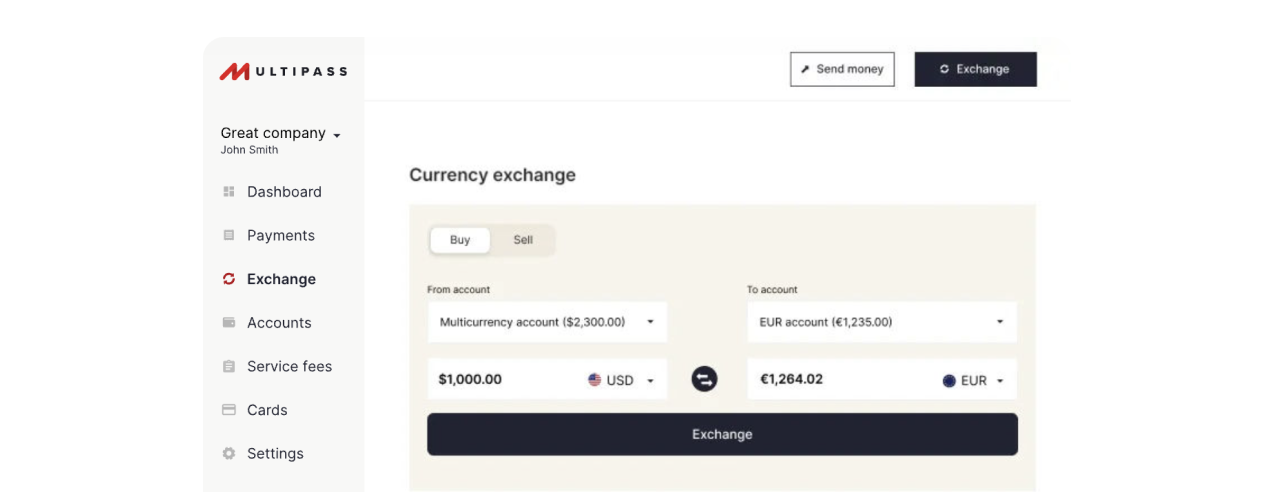
Netherlands · CASP
The Netherlands gave its DNB-registered crypto firms only six months, and the transition closed on 30 June 2025. Today the AFM grants the licence, while DNB handles prudential supervision and qualifying holdings. We supply the platform and the technical answers both of them will ask for.

Multipass is a financial services provider offering global business accounts, multi-currency payments, and cross-border transaction solutions.
Read case study

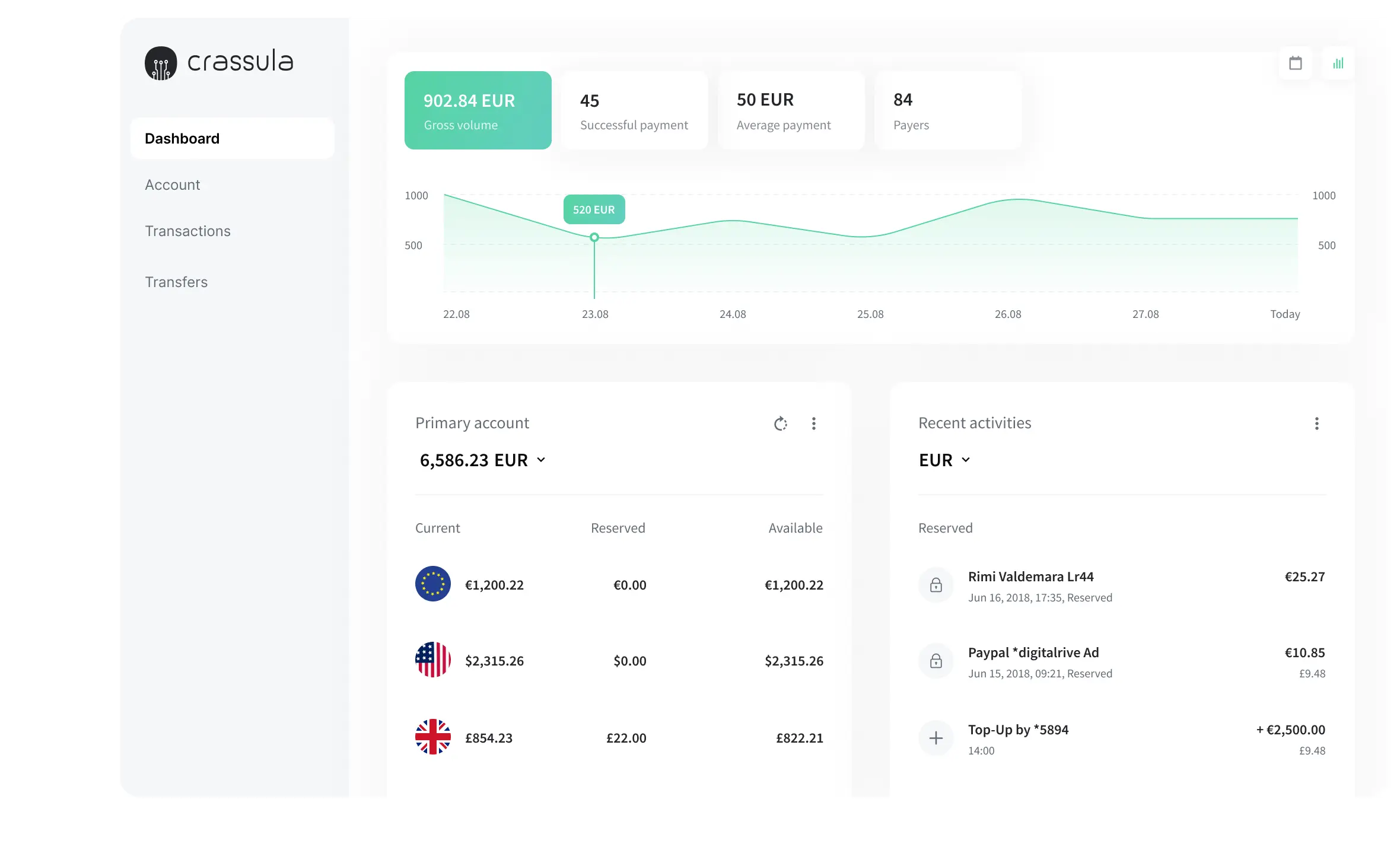
Paysend & Crassula - a banking solution for international companies
Read case study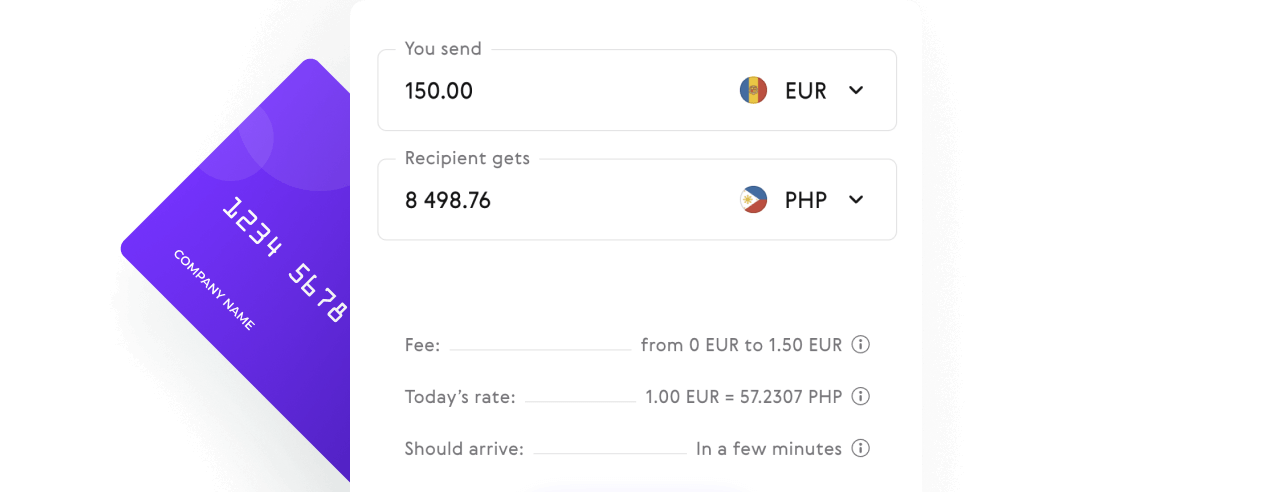

LuxPay is at the forefront of providing advanced financial services, designed to meet the needs of modern businesses and consumers alike.
Read case study

Wickie offers secure and scalable fiat and cryptocurrency payment solutions, providing users with digital wallets and seamless financial services across multiple platforms.
Read case study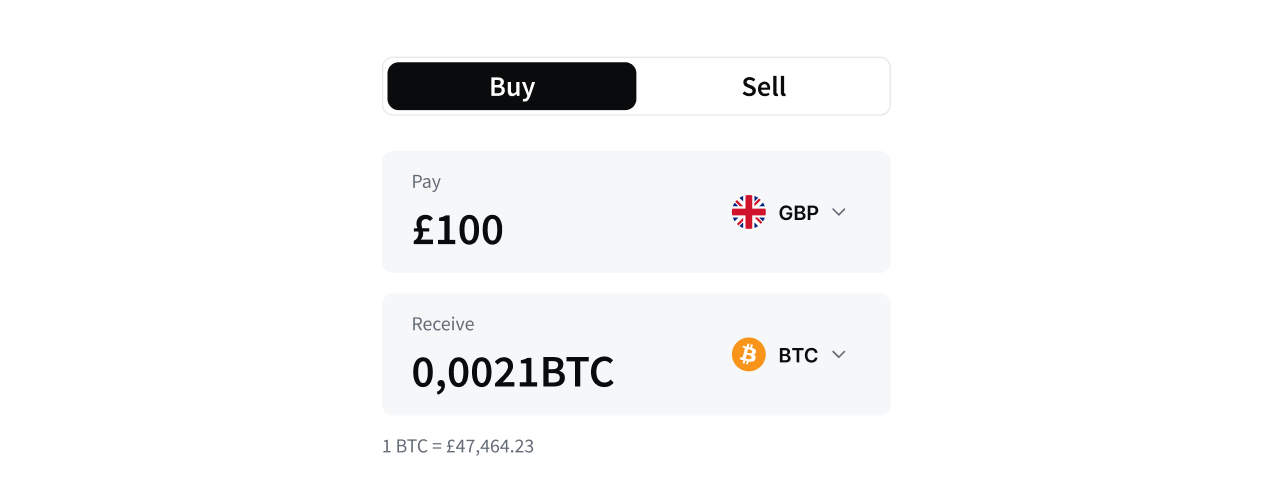
Crypto accounts with a deposit address and QR code per client. You act as custodian under MiCA and run the keys on custody infrastructure you contract, so Crassula never touches them.
Clients buy and sell crypto against euro with liquidity from a connected provider, and see the rate and fee before they confirm. The euro side settles in their account in the same app.
Euro accounts with SEPA, SEPA Instant and SWIFT through the bank you work with. Fiat owed to clients and their crypto balances post to one ledger.


Internal transfers between your clients and on-chain withdrawals. Originator and beneficiary data go out through a Travel Rule provider you connect.
After the AFM forwards your notification to other member states, the same apps and back office serve clients there.
Each requirement, what the platform gives you for it and who owns it after launch.
A configured environment and a written ICT description you can put in front of the AFM during the pre-scan, so the feedback covers your real set-up.
You, with our inputLedger exports of client and own-account balances and fee income, which your finance team uses for the own-funds calculation.
Your finance teamNothing to provide here. This part of the file is about your owners, not your systems.
You and your shareholdersArchitecture, hosting, access roles, 2FA, audit trail, backup and incident handling described, plus the details for your register of ICT third-party arrangements.
Crassula drafts, you adoptPer-client crypto holdings on separate ledger accounts from your own, with exports to reconcile against the wallets at your custody provider.
Your operations team, on platform dataThe euro owed to each client on the ledger, ready to reconcile against your client money account.
Your finance team, on platform dataOnboarding questionnaires per client type, identity checks and screening through connected providers, client limits.
Your compliance officerOriginator and beneficiary data captured at onboarding and on each transfer, exchanged through a connected Travel Rule provider.
Your compliance officer
Rails your customers can use

MiCA-authorised by the Central Bank of Ireland and passported across the EEA. Liquidity for your exchange service, or Kraken Embed, which went live in the Netherlands with bunq, if you start before your own licence.
Rules that change what you have to build, in the order they apply.
The AFM starts accepting MiCA licence applications from crypto-asset service providers.
MiCA applies to CASPs, along with the crypto Travel Rule in Regulation (EU) 2023/1113. The AFM becomes the licensing authority.
DORA applies to crypto-asset service providers.
The six-month Dutch transition ends. Firms registered with DNB need a MiCA licence or a passport to keep serving the Netherlands.
The AFM's own estimate of the minimum time to process a full licence application.
Two Dutch supervisors look at your firm: the AFM decides on the licence and DNB checks your prudential position and your owners. We give you a working platform and the technical part of the file, while your legal advisers handle the rest.
A configured environment to show the regulator, not slides.
ICT systems, security and DORA, outsourcing and business continuity sections, in shape for the AFM pre-scan and the formal file.
Liquidity through Kraken, plus banking, custody and KYC providers from our network, matched to your licence.
Crassula provides technology and documentation support. We do not provide legal or regulatory advice and cannot guarantee the outcome of an application.

Think of a Rotterdam team with a savings app for Dutch households that wants to add bitcoin. Its quickest start is Kraken Embed, which bunq already runs in the Netherlands, so clients can buy and sell under Kraken's authorisation while the team keeps the front end. Its lawyers confirm where the line sits for the team's own role.
In parallel it prepares its own AFM licence. We set up the environment in its brand and write the ICT and DORA part with the team, and it brings that draft to the AFM pre-scan. A new investor taking 15 percent goes through DNB's qualifying holding assessment at the same time. Once the AFM grants the licence, clients move to wallets the team holds itself, with the same app and the same ledger.
For the regulatory background, read the MiCA CASP licence guide and our guide to white-label crypto wallets.