
Electronic Money Institution (EMI) License in 2026: The Complete Guide
A 2026 deep dive into the Electronic Money Institution (EMI) license: scope, EMD2 and PSD3 framework, capital and safeguarding requirements, EU and UK jurisdictions compared, and the fastest path to launch.

What is an Electronic Money Institution?
An Electronic Money Institution (EMI) is a regulated non-bank authorised to issue electronic money, hold customer funds in safeguarded accounts, and provide the full set of payment services under PSD2. The EMI license is the backbone of most neobanks, crypto on/off ramps, remittance apps, corporate expense platforms and embedded finance products shipped in Europe over the past decade.
In legal terms, an EMI converts fiat into a claim on the issuer that can be stored, redeemed at par and accepted by third parties. That claim is e-money. The issuer does not lend from its own balance sheet, does not take interest-bearing deposits, and must keep 100% of client funds segregated or insured. It is a narrow-bank model with a very wide product surface.
Issue e-money
Wallets, IBANs, prepaid and debit cards, multi-currency accounts, payroll cards and gift vouchers.
Safeguard funds
100% of client money in segregated accounts at a credit institution, in low-risk liquid assets, or covered by insurance.
Provide PSD2 services
SEPA and SWIFT, acquiring, card issuing, AISP and PISP, FX, merchant payouts, all under a single license.
What an EMI cannot do is equally important. No fractional reserve lending from its own balance sheet. No interest on client balances out of the safeguarded pool. No issuance of credit products funded by customer deposits. If the business plan needs those, the answer is a banking license or a distribution partnership with a bank.
Building a business on this licence?
See what the platform covers for it: the regulator's IT questions, rails, providers and the technical part of your application.
- Card issuing for Lithuanian EMIs
- Core banking for Lithuanian EMIs
- Core banking for UK EMIs
- Digital banking for Bulgarian EMIs
- Digital banking for Czech EMIs
- Digital banking for French EMIs
- Digital banking for German EMIs
- Digital banking for Irish EMIs
- Digital banking for Latvian EMIs
- Digital banking for Lithuanian EMIs
- Digital banking for Luxembourg EMIs
- Digital banking for Maltese EMIs
- Digital banking for Dutch EMIs
- Digital banking for Polish EMIs
- Digital banking for Portuguese EMIs
- Digital banking for Spanish EMIs
- White-label digital banking for UK EMIs
- Embedded finance platform for licensed EMIs
- Neobank first, own EMI licence later
EMI vs Payment Institution vs bank
These three are the regulated perimeter that every fintech eventually sits inside. Picking the wrong one wastes 18 months and several million euros.
| Dimension | Payment Institution (PI) | Electronic Money Institution (EMI) | Credit Institution (bank) |
|---|---|---|---|
| Can issue e-money | No | Yes | Yes |
| Can hold client balances long term | Only in transit | Yes, as e-money | Yes, as deposits |
| Can lend from own balance sheet | Short-term credit linked to payments | No (not from safeguarded funds) | Yes, full lending book |
| Minimum initial capital (EU) | 125,000 EUR (full PI) | 350,000 EUR | 5,000,000 EUR |
| Deposit guarantee scheme | No | No (safeguarding instead) | Yes (up to 100,000 EUR per client) |
| EU passporting | Yes | Yes | Yes (with CRD IV/V) |
| Typical time to license | 6 to 9 months | 6 to 12 months | 2 to 4 years |
The short rule: if you only move money between third parties, a PI is enough. If you want your users to hold a balance inside your product, issue cards and provide IBANs, you need an EMI. If you need to lend from your own balance sheet and take interest-bearing deposits, only a banking license gets you there.
The regulatory stack: EMD2, PSD2, PSD3 and MiCA
EMIs live inside a tight European framework. Four pieces of legislation matter.
- EMD2 (Directive 2009/110/EC). The legal base for the EMI license. Defines e-money, sets the 350,000 EUR initial capital floor, and harmonises safeguarding, redemption at par and supervisory cooperation across the EEA.
- PSD2 (Directive 2015/2366). Lists the payment services an EMI can provide on top of e-money issuance, mandates strong customer authentication (SCA), and opens access to account information (AISP) and payment initiation (PISP).
- PSD3 and the Payment Services Regulation. The EU reached political agreement in 2024 and early 2025, with implementation targets around 2026 to 2027. PSD3 merges EMD2 into a single payments framework, tightens fraud rules, and upgrades open banking APIs. EMIs will eventually re-authorise under PSD3.
- MiCA. Markets in Crypto-Assets applies from December 2024. Any EMI that issues or custodies e-money tokens (stablecoins) fits inside MiCA by default, since the Regulation explicitly uses the EMI license for EMT issuance.
In the UK, the equivalent framework is the Electronic Money Regulations 2011 supervised by the FCA, with a parallel Payment Services Regulations 2017. Post-Brexit there is no passport into the EU, so most UK EMIs that serve both markets hold dual licenses.
Initial capital, safeguarding and own funds
The EU sets the numerical floor; national regulators layer their expectations on top. In practice the working capital needed to open the doors is well above the statutory minimum.
Three safeguarding methods are available under EMD2 Article 7. Most EMIs combine the first two.
- Segregation at a credit institution. Client money sits in a dedicated trust account at a bank, ring-fenced from EMI insolvency.
- Investment in secure, low-risk liquid assets. Typically EU sovereign bonds or money market funds compliant with CRR Article 336.
- Insurance or comparable guarantee. An insurer or bank guarantees the 100% coverage, redeemable on EMI default.
Own funds are calculated via Method A, B or C of EMD2 Article 5. Most EMIs use Method D (2% of average e-money outstanding) because it is the simplest to forecast and model. Buffers of 120 to 150% of the regulatory minimum are standard market practice; regulators in Lithuania and Ireland push for more.
Requirements for a successful application
Regulators across the EU and UK look at roughly the same nine domains. If one of them is thin, the file is parked, not rejected, and that is where the 6 to 12 month timeline stretches to 24.
Business plan
Three-year financials, product roadmap, volumes, target segments, unit economics, stress tests.
Fit and proper
Directors, shareholders above 10%, key function holders. CVs, criminal records, source of wealth.
AML/CFT program
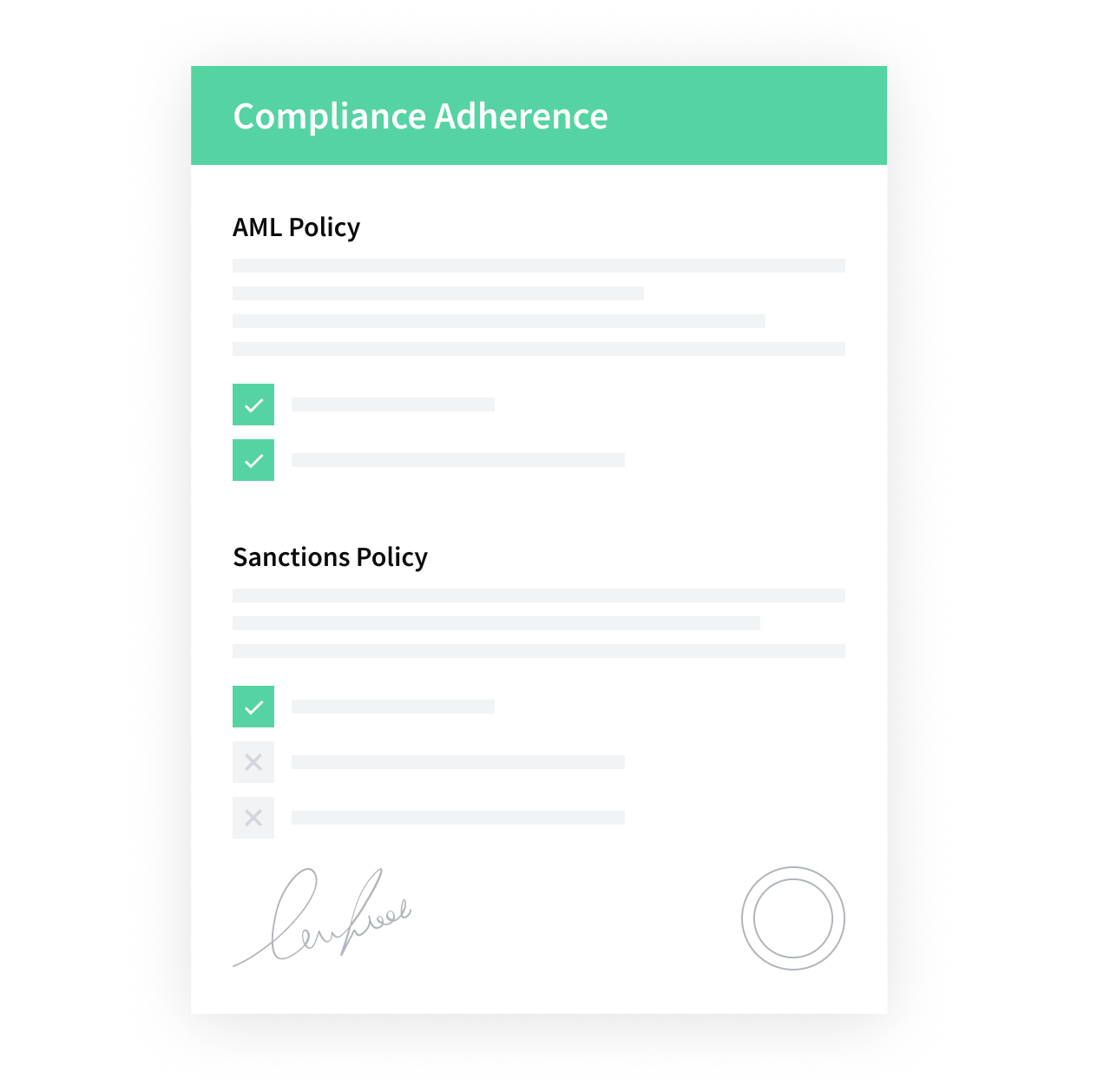
MLRO, risk assessment, KYC procedures, transaction monitoring, PEP and sanctions screening.
ICT and DORA
Security policies, incident management, third-party register, resilience testing. DORA applies since January 2025.
Safeguarding plan
Chosen method, custodian bank, reconciliation frequency, flow-of-funds diagrams.
Governance
Three lines of defence, risk and compliance functions, outsourcing policy, conflict of interest register.
The Application Form for Authorisation as an Electronic Money Institution used by most EU regulators mirrors the EBA Guidelines on authorisation and is a good template even in jurisdictions that publish their own version. The Irish Central Bank version is one of the most widely used references.
Process and timeline
From kick-off to authorisation, a well-prepared EMI application takes 6 to 12 months in the EU and broadly the same at the UK FCA. Regulator statutory clocks are shorter (3 months at the FCA, 3 months at the ACPR once the file is complete) but the real path is longer because the file is rarely complete on first submission.
| Phase | Weeks | What happens |
|---|---|---|
| Pre-application | 6 to 12 | Corporate setup, capital injection, hiring MLRO and CTO, drafting 200+ pages of policies, regulator sounding. |
| Filing | 2 to 4 | Submission of the application pack via the regulator portal (Bank of Lithuania LBChain, FCA Connect, CBI portal, ACPR). |
| Regulator review | 12 to 36 | Requests for information (RFIs), fit and proper interviews, on-site visits, clarification rounds. |
| Decision and go-live | 2 to 6 | Authorisation granted, IT acceptance tests, card scheme onboarding, first live transactions. |
Popular EMI jurisdictions compared
Five jurisdictions capture the vast majority of EMI licensing activity in 2026. Each one has a distinct profile.
| Jurisdiction | Regulator | Avg. timeline | Best for |
|---|---|---|---|
| Lithuania | Bank of Lithuania | 6 to 9 months | Crypto-adjacent fintechs, ambitious pan-EU builds, fast-track regulator. Home to Revolut, Paysera, Nium, Payrnet, ConnectPay. |
| UK | FCA | 9 to 12 months | UK-first neobanks, sterling-centric card programmes, Commonwealth corridors. |
| Ireland | Central Bank of Ireland | 12 to 18 months | Serious global platforms (Stripe, Square, Coinbase). Slow but gold-standard reputation. |
| Malta | MFSA | 9 to 12 months | Crypto-friendly boutique setups, gaming and iGaming adjacent payments. |
| Estonia | Finantsinspektsioon | 8 to 12 months | Digital-native teams, e-Residency integration, lean cost base. |
Lithuania stands out. The Bank of Lithuania runs a dedicated newcomer program, offers a sandbox and the LBChain infrastructure, and has issued the most EMI licenses in the EU after the UK. It is the default pick for crypto fintechs that need both an EMI license and MiCA authorisation inside the same jurisdiction.
EMI vs banking charter vs BaaS
Three paths lead to a live fintech product. Each one has very different economics and time-to-market.
Own EMI license
Time: 6 to 12 months
Capital: 1 to 3M EUR total
Best when you want full control over client money, card programme economics and product roadmap.
Banking charter
Time: 2 to 4 years
Capital: 20M+ EUR
Best when you need to lend from your balance sheet and take interest-bearing deposits.
BaaS partnership
Time: 6 to 12 weeks
Capital: 0.3 to 1M EUR
Best for validating a product before investing in your own license, or for vertical brands that do not want the regulatory load.
Most serious fintechs start with BaaS, prove product-market fit, then apply for an EMI license once transaction volumes justify the regulatory overhead. A banking charter is only the right call when lending is the core of the business model.
How Crassula helps you launch your EMI product
Securing the license is half the job. The other half is shipping a product that earns back the investment. Crassula is the orchestration and product layer that lets EMIs go live in weeks, not years, with a modular stack that scales from MVP to millions of clients.
Core platform
Ledger, IBAN provisioning, multi-currency wallets, card programme management, FX, payments routing, admin back office.
Compliance ready
KYC and KYB orchestration, transaction monitoring, sanctions screening, regulatory reporting, DORA-aligned architecture.
Pre-integrated partners
Card issuers, acquirers, SEPA and SWIFT providers, BIN sponsors, AML vendors. Plug in on day one.
Launch support
Licensing advisory, policy templates, regulator preparation, technical acceptance tests, go-live operations.
Whether you are a fresh EMI applicant in Lithuania, a UK FCA licensee scaling into the EU, or an established bank spinning off an e-money brand, we help you compress years of build into weeks of integration. Talk to our team to scope your EMI launch.
FAQ
An EMI is a regulated non-bank that can issue electronic money, give users an account balance and IBAN, issue cards and move money across SEPA and SWIFT. It cannot lend from its own balance sheet or take interest-bearing deposits. Most European neobanks and wallets you use (Revolut, Wise, Paysera, Lydia) started as EMIs.
The EMD2 minimum is 350,000 EUR of initial capital, compared to 125,000 EUR for a full Payment Institution. On top of that, an EMI must hold ongoing own funds equal to 2% of average e-money outstanding (Method D), plus a supervisory buffer that most regulators push toward 120 to 150% of the regulatory minimum.
Six to twelve months in the EU for a well-prepared file, with Lithuania the fastest (6 to 9 months) and Ireland the slowest (12 to 18 months). The UK FCA is similar to the EU average at 9 to 12 months. Add three to six months of pre-application work to assemble the file.
Yes. Under MiCA, e-money tokens (EMTs) can only be issued by credit institutions or EMIs. This is why most EU stablecoin projects in 2026 run under an EMI license, most of them authorised by the Bank of Lithuania or the Central Bank of Ireland.
Three methods are allowed under EMD2 Article 7: segregation in a trust account at a credit institution, investment in low-risk liquid assets, or an insurance or comparable guarantee. Most EMIs combine segregation and low-risk investment, with daily reconciliation. Client money never sits on the EMI balance sheet.
Lithuania is the default pick for crypto and pan-EU fintechs thanks to speed and regulator accessibility. Ireland is the gold standard for global platforms (Stripe, Square, Coinbase) but takes longer. The UK FCA is best for sterling-centric businesses. Malta and Estonia are niche picks. Germany (BaFin), Spain (Banco de Espana) and France (ACPR) work well when you serve a domestic-first audience.
Not always. BNPL that is structured as short-term credit can run under consumer credit rules without an EMI. Crypto exchanges use a MiCA CASP license for crypto services but typically pair it with an EMI to custody fiat balances and issue cards. The right combination depends on the product.
Crassula provides the full technology stack an EMI needs to go live: ledger, IBANs, wallets, card issuing, FX, payments, KYC and compliance tooling, all pre-integrated and DORA-aligned. We also support the licensing journey with advisory, policy templates and regulator-ready documentation so our clients go from idea to live product in months rather than years.