
Multipass is a financial services provider offering global business accounts, multi-currency payments, and cross-border transaction solutions.
Read case study
Canada · MSB
Once your MSB keeps balances for clients, two regulators look at the same ledger. FINTRAC wants to trace every transfer back to a verified client, and since September 2025 the Bank of Canada wants to know what you owe each of them at the end of every day.

Multipass is a financial services provider offering global business accounts, multi-currency payments, and cross-border transaction solutions.
Read case study

Paysend & Crassula - a banking solution for international companies
Read case study

LuxPay is at the forefront of providing advanced financial services, designed to meet the needs of modern businesses and consumers alike.
Read case study

Wickie offers secure and scalable fiat and cryptocurrency payment solutions, providing users with digital wallets and seamless financial services across multiple platforms.
Read case study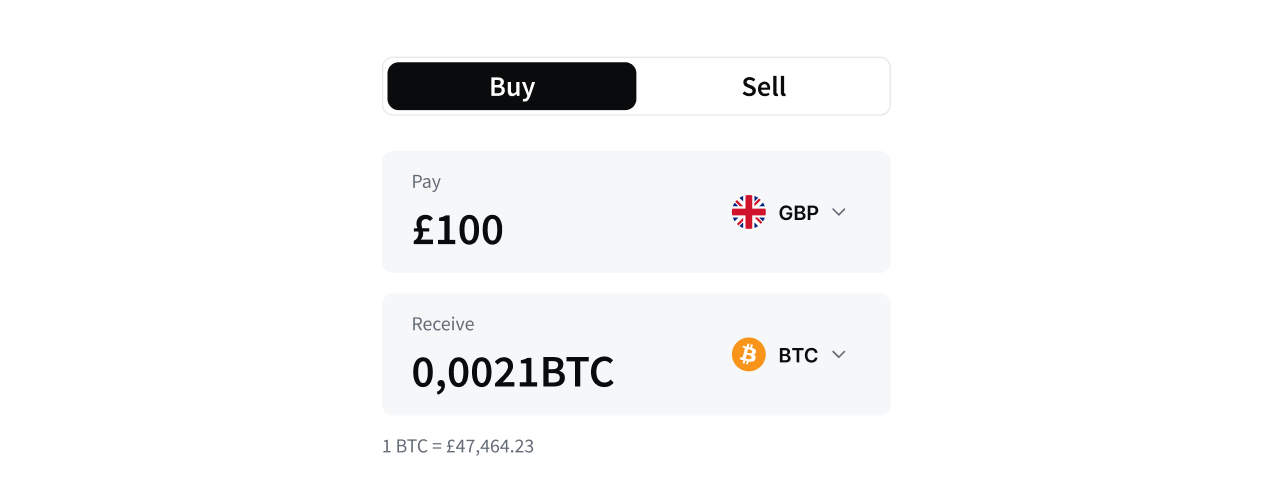
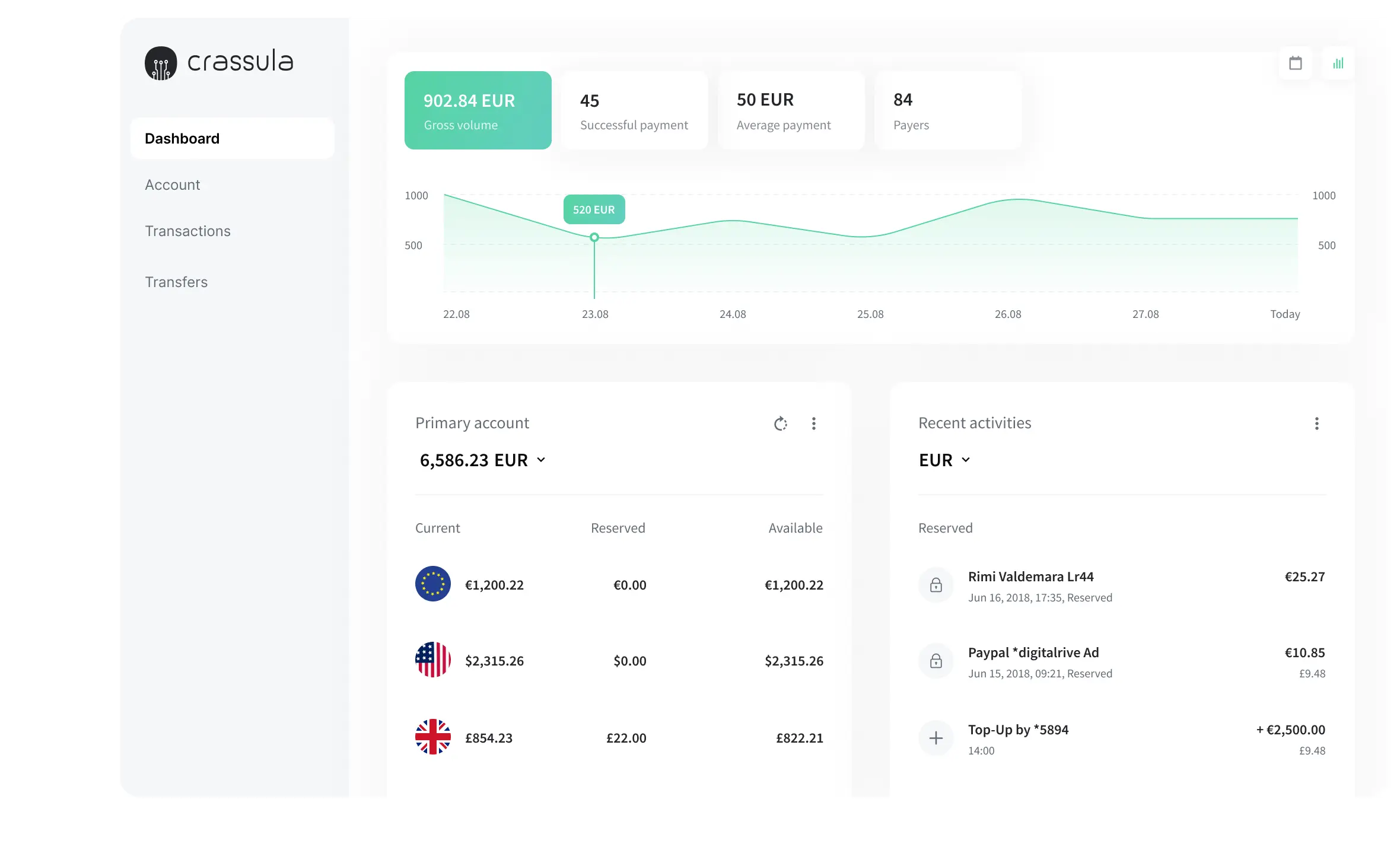
Wallet-style balances in CAD, USD, EUR and other currencies for each client, with current, reserved and available amounts kept apart on the ledger.
Spot conversion between a client's own balances, with the rate and your spread written to the transaction record. Spreads live in price lists, so changing them is a back-office task.
Importers, exporters and other companies onboarded with directors and beneficial owners, several users per company, roles, batch payments and approval steps.


Client money sits in an omnibus or trust account at your bank, and the ledger splits it into named balances, so you always know whose money is whose.
Outgoing and incoming SWIFT payments, plus SEPA and US ACH through connected providers, each posted to the client's balance with sender and recipient details attached.
Client files, transaction history, limits and freezes in one dashboard, with an audit trail of who changed what.
Each requirement, what the platform gives you for it and who owns it after launch.
Onboarding questionnaires by client type, client limits and per-client risk data that your policies and risk assessment can refer to.
Your compliance officerIdentity checks for individuals through connected verification providers, and company onboarding that records directors and owners.
Your compliance officerTimestamped transfer records per client that can be exported and grouped over 24 hours to find reportable transfers.
You file with FINTRAC, on platform dataFull transaction history per client as the input for your monitoring tool or a connected provider. The platform does not decide what is suspicious.
Your compliance officerClient records, transfer details with exchange rates and an audit trail of back-office actions, kept and retrievable for the full period.
SharedOriginator and beneficiary name, address and account number stored on every transfer record. The messaging itself runs through your bank or payment provider.
You, with your payment providerAn end-of-day balance for every end user with name and contact details, exported to reconcile against your trust or segregated account.
Your finance team, on platform dataA description of the platform, its hosting and backups, our incident process and the providers behind it, for your third-party section.
Your senior officer, with our inputActivity figures, such as numbers of end users, transactions and values, pulled from reporting endpoints and exports.
You, with platform data
Rails your customers can use
Rules that change what you have to build, in the order they apply.
Bank of Canada supervision under the RPAA began. Payment service providers must have their risk management and safeguarding frameworks in place.
FINTRAC's new administrative monetary penalties framework took effect, with higher maximum penalties plus compliance agreements and orders.
Payments Canada plans to launch the Real-Time Rail. Only Payments Canada members can apply to take part, and RPAA-registered PSPs are now eligible for membership.
Annual report to the Bank of Canada for calendar year 2026 is due, covering operational risk, incidents, safeguarding and activity figures.
Both regulators want to understand how money moves through your business. We give you a live platform and the technical write-up behind it, and your lawyers and compliance officer handle the registrations themselves.
A configured environment to show the regulator, not slides.
System description, hosting, third-party and incident sections for your RPAA framework, and a map of the data behind your FINTRAC reports.
Banking, safeguarding and KYC providers from our network, matched to your registration.
Crassula provides technology and documentation support. We do not provide legal or regulatory advice and cannot guarantee the outcome of an application.

Take a currency exchange firm in Toronto that pays overseas suppliers for Canadian importers. It is already registered with FINTRAC, but clients now keep USD and CAD balances between payments, which puts the firm under the Retail Payment Activities Act as well.
We set up the platform in the firm's brand and move client balances onto the ledger, one balance per client and currency. The compliance officer gets transaction exports in the shape the EFT reports need, and the finance team uses the end-of-day client balances to reconcile against the trust account at its bank. The same balances, together with the incident log, feed the annual report to the Bank of Canada.
For the regulatory background, read our guide to MSB registration in Canada and the RPAA registration guide.