
Multipass is a financial services provider offering global business accounts, multi-currency payments, and cross-border transaction solutions.
Read case study
United Kingdom · EMI
Your EMI owns the card programme and the cardholder. A Mastercard or Visa principal member issues and processes under an agreement you sign with it, and the platform ties every card to a safeguarded e-money balance and puts the controls in your customers' hands.

Multipass is a financial services provider offering global business accounts, multi-currency payments, and cross-border transaction solutions.
Read case study

Paysend & Crassula - a banking solution for international companies
Read case study

LuxPay is at the forefront of providing advanced financial services, designed to meet the needs of modern businesses and consumers alike.
Read case study

Wickie offers secure and scalable fiat and cryptocurrency payment solutions, providing users with digital wallets and seamless financial services across multiple platforms.
Read case study
Customers load a card from their e-money balance and move unspent money back, and a dry run shows the fee and the result before any money moves.
A card linked to the customer's e-money account places a hold on authorisation and posts the final amount when the scheme settles it.
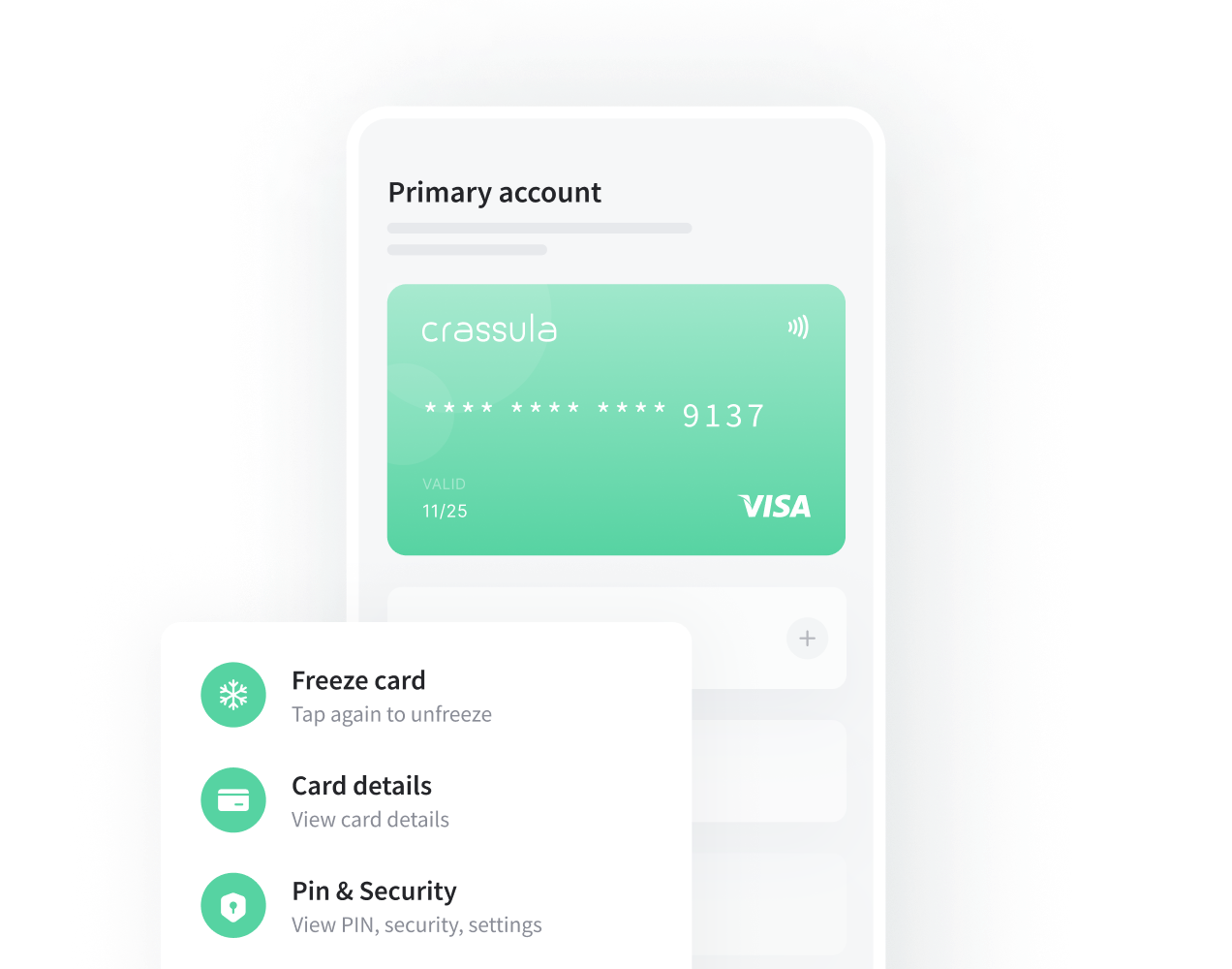
Since the FCA let firms set their own contactless limits, customers want a say. Where your processor supports it, each card has its own contactless, online and ATM switches and spending limits in the app.


A company issues cards to staff from one business account, sets a limit for each person and reissues a lost card without closing the account.
Secure display of card details, PIN delivery, one-time passwords and resets of the PIN retry counter, without card numbers passing through your own systems.
Each requirement, what the platform gives you for it and who owns it after launch.
Pre-integrated issuers such as Decta, and the technical description your issuer asks for in its due diligence.
You sign directly with the issuerA map of who does what between your EMI, the processor and Crassula, with subcontractors and hosting locations.
You, with our input3-D Secure sessions through Decta, approved or declined by the cardholder in your app, plus two-factor login.
Shared with the processorCard balances, open holds and settled spend for every cardholder, exported each day for your reconciliation.
Your finance team, on platform dataA PCI DSS Level 1 platform and a cardholder data endpoint, so card numbers stay out of your back office.
SharedCard transaction history with merchant name, country and category code, so support can check a claim quickly.
Your operations team, with the processorLimits per card and per customer and instant freezes. Sanctions screening runs through a connected provider.
Your MLROA description of how card authorisations flow through the processor and the platform, for your impact tolerances and scenario tests.
You, with our input
Rails your customers can use
Mastercard principal member that issues cards for a UK-based EMI under its BIN sponsorship programme, covering personalisation, processing, settlement and disputes. Pre-integrated with Crassula, including 3-D Secure. You contract Decta directly.

UK clearing bank with safeguarding accounts for EMIs, where the funds behind card balances can sit, and Faster Payments for card top-ups.
Rules that change what you have to build, in the order they apply.
The FCA dropped the GBP 100 contactless cap. Issuers with strong fraud controls set their own limits and must explain any change to cardholders.
CASS 15 took effect. Money behind card balances is part of the daily reconciliation and the monthly safeguarding return.
Safeguarding return due within 15 business days of month end, including the funds that back your cards.
If cards are part of your business plan, the FCA will want to know who issues them, who processes them and how the money behind them is safeguarded. We show the card flows on a working platform and write that part of the technical file with you.
A configured environment to show the regulator, not slides.
IT systems, card processing outsourcing, PCI DSS scope, security and continuity sections of your FCA application.
Card issuing and processing through Decta, safeguarding through ClearBank, and KYC providers from our network.
Crassula provides technology and documentation support. We do not provide legal or regulatory advice and cannot guarantee the outcome of an application.
Think of an EMI in Bristol whose app pays gig workers the same day they finish a job. Its customers ask for a card so they can spend that money at once. The EMI signs an issuing and processing agreement with a scheme member, and we connect the card product to the platform.
Workers get a virtual card the moment they are verified and can order plastic later, keeping the same card. After the March 2026 change, the EMI kept a GBP 100 contactless limit as its default and let each worker switch contactless or online payments off in the app. Card holds and settled spend go into the daily safeguarding reconciliation from day one.
For the licence itself, see our UK EMI licence guide. New to card programmes? Start with what card issuing is.