
How To Start An Online Bank From Scratch In 2026
A 2026 playbook for launching a digital bank: charter vs BaaS vs white-label, capital requirements, regulatory paths across the EU, UK, US and LatAm, tech stack, timelines and launch roadmap.
Why launch an online bank in 2026?
Digital banking is no longer the frontier, it is the default. More than 70% of retail customers in mature markets now interact with their primary account through an app, and a third of adults in Europe, the UK and the US hold at least one account with a neobank. The 2023-2025 shake-out flushed out the weakest players and tightened the rules. That leaves a cleaner field for teams that know what they are building and why.
The 2026 market rewards three things: a specific customer (freelancers, expats, SMBs, a vertical like construction or healthcare), a credible regulatory and capital plan, and a tech stack that can ship in weeks instead of years. This guide maps the three paths to launch, the capital and time each one costs, and the operational decisions that determine whether you reach break-even or burn through a runway.
Pick a wedge
A vertical or customer segment you can serve 10x better than an incumbent. "A bank for everyone" is a budget shredder.
Pick a license path
Own charter, EMI, BaaS partner or white-label. The answer drives capital, timeline and product ceiling.
Pick a ship date
Work backwards from launch. White-label lands in 6-12 weeks. A greenfield charter is a 2-5 year project.
Let's discuss your project and see how we can launch your digital banking product together
Request demoOwn license vs BaaS vs white-label: the decision tree
Every online bank reduces to one of three operating models. Pick the wrong one and you will either run out of money before launch or launch a product you cannot legally grow. The table below is the single most important decision you will make.
| Model | Time to launch | Capital to start | Product ceiling | Best fit |
|---|---|---|---|---|
| Own banking license | 2-5 years greenfield | EU credit institution: 5M EUR initial + ongoing CET1. US de novo: 15-30M USD. | Unlimited - deposits, lending, treasury, own balance sheet. | Well-funded teams with incumbent DNA aiming at primary-account status. |
| EMI / Payment Institution | 9-18 months | EU EMI: 350k EUR. EU PI: 20k-125k EUR depending on services. | Accounts, IBANs, cards, FX, payments. No on-balance-sheet lending. | Neobanks, multi-currency wallets, SMB and freelancer products. |
| BaaS partnership | 3-6 months | 0.5-3M EUR | Whatever the sponsor covers. Lending often gated. | Fintechs with a sharp vertical and a growth thesis. |
| White-label (Crassula) | 6-12 weeks to MVP | Low six figures plus capital of the chosen license route. | Full neobank experience on top of your licensed entity or partner. | Teams that want a branded product without rebuilding ledger, KYC and card programs. |
The pragmatic sequence that most successful 2026 launches follow: start on white-label over a BaaS partner, reach product-market fit and a meaningful deposit base, then migrate to an EMI of your own, then, if lending is core, transition to a full credit institution license. Each step multiplies capability and capital needs by roughly 10x.
Step-by-step roadmap
The sequence below is what a disciplined founding team works through over the first 12 to 24 months. Skip a step and you will pay for it later in a rushed license refile or a ledger rebuild.
Market research and niche
Pick a specific customer whose pain you can quantify. Map incumbents, pricing and regulatory posture.
Business plan and unit economics
Build a 5-year model: CAC, primary-account share, interchange, NIM, FX and fee income.
Capital and funding plan
Size for regulator minimums plus 18-24 months of operating runway. Expect two raises before profitability.
Legal entity and jurisdiction
Incorporate where you will be licensed. Align governance, UBO structure and shareholder agreement with regulator expectations.
License or EMI application
Draft the Programme of Operations, ICAAP, ILAAP, recovery plan, and fit-and-proper files for directors.
Sponsor bank selection
If you go BaaS: shortlist sponsors, run diligence on their regulator standing, reconciliation and exit terms.
Core banking and tech stack
Choose core (Mambu, Thought Machine, Finxact or Crassula), ledger, KYC orchestration and card issuing.
Payment rails
SEPA, SEPA Instant, FasterPayments, FedNow, SWIFT, Pix. Direct access or via sponsor. Plan both paths.
KYC, AML and fraud
Onboarding flows, transaction monitoring, sanctions screening, SAR processes. Name a MLRO early.
Card program
BIN sponsor, Visa or Mastercard, issuer processor (Marqeta, Galileo, Paymentology). Physical plus virtual.
Customer experience
Mobile-first onboarding under 5 minutes, multilingual support, accessibility, complaints handling.
Launch and scale
Closed beta, public launch, growth loops, regulator reporting cadence and an annual audit.
Regulatory path per region
Regulation is not an obstacle, it is the product. Pick your jurisdiction based on where your customers live, where your capital sits, and where the regulator has a predictable playbook for new entrants.
European Union
Credit institution licenses are granted by the national competent authority (BaFin, Banco de España, ACPR, Banca d'Italia) with ECB involvement through the Single Supervisory Mechanism for significant institutions. EBA sets the harmonised technical standards. Initial capital for a credit institution is 5M EUR. EMI is 350k EUR. Payment institutions sit between 20k and 125k EUR depending on services. CRD VI and the 2025 AMLR / AMLA package apply from 2026 onward.
United Kingdom
Dual regulation: the PRA authorises banks, the FCA handles conduct and EMIs. The PRA's Mobilisation stage (often called "authorisation with restrictions") lets you launch with a restricted license, a smaller initial capital (around 1M GBP) and up to 12 months to build the rest of the firm. Full authorisation follows. EMI and API paths run through the FCA alone.
United States
Three realistic charters: an OCC national bank charter, a state commercial bank (with FDIC insurance), or an industrial bank in Utah or Nevada. Typical de novo capital is 15-30M USD plus a 3-year business plan accepted by the FDIC. Most 2026 launches start under a sponsor bank with an FBO or for-benefit-of account structure, then evaluate their own charter once deposits justify it.
Latin America
Brazil's Banco Central issues Sociedade de Crédito Direto (SCD) and Instituição de Pagamento (IP) licenses that have powered Nubank and dozens of others. Mexico's CNBV runs the IFPE e-money license under the Fintech Law. Colombia's SFC and Chile's CMF have active neobank frameworks. Pix, CoDi and similar instant rails make LatAm a genuine greenfield in 2026.
Capital, timeline and the cost of patience
Timelines are the silent killer. A team that budgets 18 months for a charter and gets 36 is dead before the first deposit. Use these reference numbers as a floor, not a ceiling.
| Path | Typical timeline | Cash burn before revenue |
|---|---|---|
| Greenfield banking charter | 2-5 years | 15-50M USD/EUR |
| EMI / PI | 9-18 months | 2-8M EUR |
| BaaS partnership | 3-6 months | 0.5-3M EUR |
| White-label (Crassula) | 6-12 weeks MVP | Low six figures on top of your license path |
Tech stack choices
By 2026 there is no excuse for building a core ledger in-house unless core banking is literally your product. Pick proven components, integrate well, and own the customer experience.
Core banking
- Mambu - cloud-native, strong in EU and LatAm
- Thought Machine - Vault Core, tier-1 deployments
- Finxact (Fiserv) - US-first, FDIC-friendly
- 10x Banking, Tuum, SDK.finance - modern contenders
- Crassula - white-label with core, UX and admin included
Card issuing
- Marqeta - global, broad BIN coverage
- Galileo (SoFi) - US mainstay
- Paymentology, Enfuce, Nium - EU and EMEA
- Highnote, Lithic - modern issuers for vertical programs
KYC, AML and fraud
- Onfido, Sumsub, Veriff - identity verification
- ComplyAdvantage, Sardine - transaction monitoring
- SEON, Unit21 - fraud detection and case management
- Chainalysis, TRM Labs - for any crypto exposure
Payments
- SEPA and SEPA Instant via direct participation or sponsor
- FasterPayments and CHAPS in the UK
- FedNow, RTP, ACH and wires in the US
- Pix in Brazil, SPEI in Mexico
- Currencycloud, Wise Platform, Nium for cross-border
Team, operations and the UK Mobilisation trick
Regulators authorise people as much as they authorise plans. The founding team must cover four named functions from day one: CEO, CFO, Head of Risk and Compliance, and MLRO. All four are fit-and-proper tested. Add a CTO, Head of Product, Head of Operations and a Chair as you scale.
The UK has a pragmatic shortcut worth understanding. The PRA's Mobilisation stage grants a restricted license with lower initial capital (around 1M GBP) and a 12-month window to finish building the firm before full authorisation. Monzo, Starling, Atom and Kroo all used it. If you are targeting the UK, the Mobilisation path can cut 12-18 months off a cold-start charter.
The natural exit from a BaaS arrangement is a direct license. Plan the transition before you sign the sponsor contract: portability of the ledger, customer data, KYC files and card BIN. A good white-label platform like Crassula stays with you across that transition so you do not rebuild the product when the license changes underneath it.
Locale specifics: Germany, Spain, France
Inside the EU, the national regulator is where the real work happens. Three markets dominate neobank launches in 2026.
| Market | Regulator | Typical path | What to watch |
|---|---|---|---|
| Germany | BaFin (with Bundesbank) | KWG banking license or ZAG EMI / PI license | Post-Solaris scrutiny on BaaS, strict MaRisk IT requirements, German-language documentation. |
| Spain | Banco de España and CNMV | Credit institution, SEDE (e-money) or entidad de pago | Fast-growing fintech hub, clear path for LatAm-facing players, CBE 4/2017 operational rules. |
| France | ACPR (with AMF for investments) | Etablissement de crédit, EME or EP under the Code monétaire et financier | Strong appetite for fintechs, ACPR Fintech Innovation desk, mandatory French-language CX. |
A passport across the EEA follows from any one of these authorisations, so picking the right home regulator is often the highest-leverage decision of the whole project.
How Crassula helps you launch in 2026
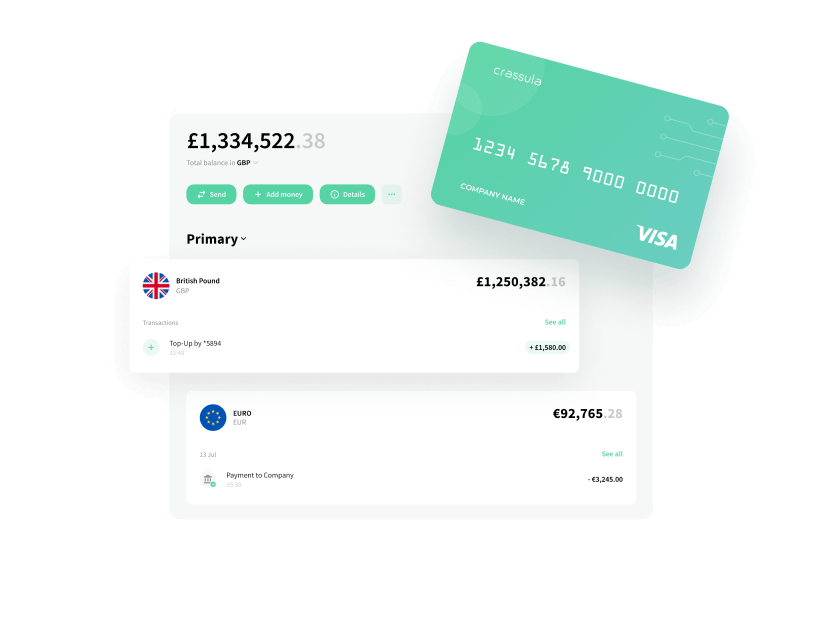
Crassula is the white-label platform teams use when they want a branded online bank live in weeks, not years. We ship the boring but critical 80%: ledger, IBAN provisioning, KYC orchestration, card program, payments routing, web and mobile apps, and an admin back office. You bring the brand, the niche and the license (your own EMI, a sponsor bank, or one of our partners).
6-12 weeks to MVP
Go from term sheet to a branded mobile app with accounts, cards and payments in a single quarter.
Modular, license-agnostic
Swap sponsors or migrate to your own charter later without rewriting the product.
Regulator-ready
Reconciliation, audit logs, SAR workflows and reporting built in from day one.
Talk to our team about your launch plan and we will map the fastest route from where you are today to a live, regulated product serving real customers.
FAQ
Six to twelve weeks on white-label over a sponsor bank. Three to six months for a direct BaaS integration. Nine to eighteen months for your own EMI. Two to five years for a greenfield banking charter. The UK Mobilisation stage can compress a bank charter timeline by a year or more.
EU credit institution: 5M EUR initial capital plus ongoing CET1 buffers. EU EMI: 350k EUR. UK PRA bank in Mobilisation: around 1M GBP. US de novo: typically 15-30M USD. Plan on 18-24 months of operating runway on top of the regulatory minimum.
BaaS or a white-label platform over a sponsor is enough to launch accounts, cards, payments and FX. You will need your own license if you plan to hold deposits on your balance sheet, lend from your own book at scale, or remove the sponsor as a single point of failure. Many 2026 launches start on BaaS and migrate to their own EMI within 18-24 months.
Mambu and Thought Machine for tier-1 ambitions, Finxact for US, 10x Banking, Tuum and SDK.finance as modern alternatives. If you want the core plus UX, KYC and admin in one place and a 6-12 week path to MVP, Crassula's white-label platform packages everything into a single integration.
A PRA mechanism that grants a restricted banking license with around 1M GBP initial capital and up to 12 months to complete build-out before full authorisation. Monzo, Starling, Atom and Kroo all used it. It is the shortest credible path to a UK bank charter.
Pick the jurisdiction where your customers live, your capital sits, and the regulator has a predictable playbook. The EU gives EEA passporting from one authorisation. The UK has Mobilisation. The US has deep markets but high de novo capital. LatAm (Brazil, Mexico, Colombia, Chile) has modern fintech laws and instant rails (Pix, SPEI) that make greenfield credible.
Crassula is the product and orchestration layer: ledger, KYC, card program, IBANs, payments routing, web and mobile apps, and the admin back office. You plug in your own licensed entity or a BaaS partner (Solaris, Swan, ClearBank, Unit, Railsr, Currencycloud) and ship a branded online bank in weeks rather than years.
Underestimating capital needs, picking a jurisdiction for tax reasons instead of customer reasons, hiring a MLRO too late, building a ledger in-house, and treating compliance as an afterthought. The 2023-2025 BaaS shake-out punished every one of these mistakes. The 2026 winners treat reconciliation, transaction monitoring and regulator relationships as core product.