
White-Label Financial Software in 2026: The Complete Guide
A 2026 deep dive into white-label financial software: categories, vendor landscape, build vs buy vs white-label economics, compliance inheritance, and how to ship a branded fintech product in weeks.
What is white-label financial software?
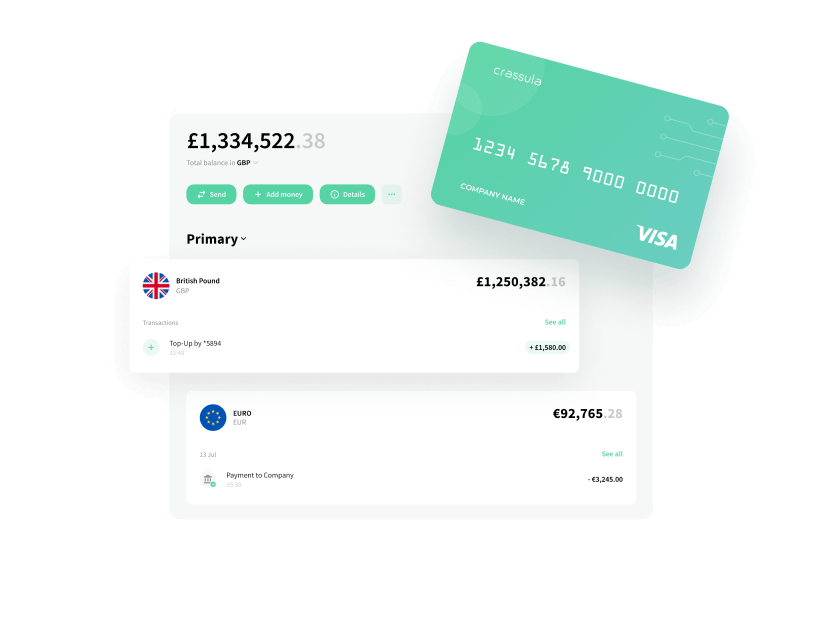
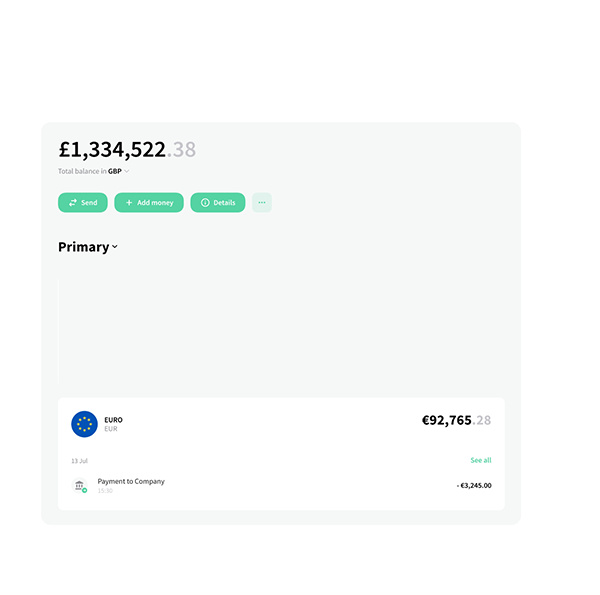
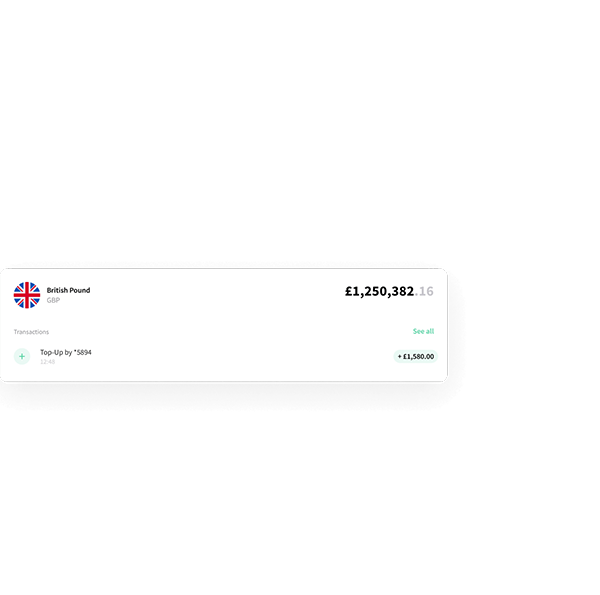
White-label financial software is a turnkey technology stack, built and maintained by a specialist vendor, that you rebrand and launch as your own product. The vendor writes the ledger, the onboarding, the card program, the admin console and the mobile apps. You ship it with your logo, your domain, your email sender and your tone of voice. Your customers see your brand; the vendor stays invisible.
In 2026 the category has moved far beyond "banking in a box". A modern white-label suite covers everything from digital banking and wallets to payment gateways, crypto exchanges, investing platforms and BNPL. The point is not "cheap software". The point is time-to-market and optionality: ship a real product in weeks, validate the market, and keep the freedom to swap rails, add products or move to your own license later.
Turnkey stack
Ledger, KYC, cards, IBANs, payments routing and admin back office. Integrate once, configure the rest.
Deep branding
Custom UI, your own domain, white-label email sender, themeable mobile apps. The vendor never appears.
Modular rails
Plug in your own license or the vendor's BaaS partner marketplace. Swap providers without a rewrite.
By 2026, embedded finance revenue is projected to pass $320 billion globally, and nearly every serious fintech launch touches a white-label layer somewhere in the stack. The question for most founders is no longer "should we buy white-label?" but "which vendor, which modules, and how deep should the branding go?".
Let's discuss your project and see how we can launch your digital banking product together
Request demoThe six categories of white-label in 2026
White-label has fragmented into distinct product categories. Most programs combine two or three of them.
White-label neobanks
Full digital banking: IBANs, multi-currency accounts, debit cards, local and SWIFT payments, treasury dashboards. The Crassula sweet spot.
White-label payment gateways
Card acquiring, APMs, 3DS2, tokenisation, routing and reconciliation under your brand. Target: PSPs, platforms, ISOs.
White-label crypto exchanges
Order book, custody, fiat on/off ramps, MiCA-ready compliance. Target: regulated brokers and regional exchanges.
White-label wallets
Closed-loop, open-loop or stablecoin wallets, virtual cards, P2P transfers, loyalty. Target: telcos, retailers, super-apps.
White-label investing
Brokerage, fractional shares, ETF and crypto portfolios, robo-advisory. Target: private banks, wealth tech, neobrokers.
White-label BNPL and lending
Installment engines, underwriting, collections, merchant portals. Target: marketplaces, retailers, B2B platforms.
Crassula's platform is unusual in spanning banking, wallets, payments and crypto in a single codebase, which matters when a program starts as "just a wallet" and turns into a full neobank 18 months later.
Why teams choose white-label in 2026
Four commercial forces push serious teams toward white-label rather than ground-up development.
Time to market
A white-label MVP ships in 6 to 12 weeks. A custom build typically runs 18 to 36 months before first revenue. In a market where Revolut adds a product a quarter, 18 months is enough to miss the wave entirely.
Cost envelope
White-label programs land in the low-to-mid six figures all-in. A credible custom neobank build is eight to nine figures before you count regulatory capital, ongoing engineering and support.
Optionality
A good white-label platform is modular. Start as an agent of an EMI, migrate to your own license later, add crypto once MiCA clears, and do it all without rewriting the ledger or the onboarding flow.
Reduced vendor lock-in
Modern white-label vendors route to multiple BaaS partners, card issuers and payment rails. If one provider deprioritises your segment, you swap the rail, not the product.
Vendor landscape 2026
The white-label financial software market is not winner-takes-all. The real question is which vendor matches your product shape, your region and your compliance posture. Here is how the most cited names stack up in 2026.
| Vendor | Strongest product | Geography | Best fit |
|---|---|---|---|
| Crassula | Full-stack neobank, wallet, payments and crypto on a single modular platform. Deep white-labeling (UI, domain, email, mobile apps) and a pre-wired BaaS partner marketplace. | EU, UK, MENA, LatAm, Asia | Fintechs, EMIs, PSPs and enterprise brands that want one vendor across accounts, cards, payments and crypto with deep branding. |
| SDK.finance | Core ledger and digital banking APIs, source-code licensing option. | EU, CIS, emerging markets | Teams that want to own the codebase and have engineering capacity to run it. |
| Velmie | Mobile-first neobank front-end, modular microservices back-end. | EU, MENA, Africa | Mobile-first challenger banks in emerging markets. |
| ValidusTech | Core banking for regulated Tier 2 and Tier 3 institutions. | APAC, GCC | Regional banks modernising legacy cores. |
| BANKiQ | Risk, AML and compliance-centric banking software. | India, GCC, APAC | Banks with a compliance-first transformation agenda. |
| Appinventiv | Bespoke fintech engineering services with pre-built accelerators. | Global | Programs that need heavy custom work on top of a white-label base. |
| Glory Global Solutions | Cash handling, branch automation, retail banking technology. | Global | Retail banks with significant physical branch networks. |
Crassula's positioning is the "one-vendor, multi-product" bet: one ledger, one admin, one onboarding engine covers banking, wallets, payments and crypto. For teams that expect to grow from "just a wallet" to "neobank with a brokerage" over 24 months, that avoids a re-platform mid-scale.
Key evaluation criteria
White-label vendor selection is not a feature-ticking exercise. Six factors separate the vendors you can build a real business on from the ones you will regret in year two.
- Modularity. Can you take just the ledger, just the card program or just the onboarding, and plug them into your existing stack? Monolithic platforms that force an all-or-nothing adoption are a red flag.
- White-label depth. Anyone can change a logo. Ask about custom domains, white-label email senders, fully themeable mobile apps, signed SSL on your domain, and whether customer support communications reference the vendor at all.
- Compliance readiness. In the EU that means DORA resilience testing, PSD2 SCA flows, MiCA readiness for crypto, AMLR alignment and audited KYC vendors. In the US, FDIC pass-through clarity and 1033 data portability.
- BaaS partner marketplace. A vendor that already integrates Solaris, Swan, ClearBank, Railsr, Unit, Modulr and Currencycloud can get you live on the rail that fits your geography in weeks instead of quarters.
- Developer experience. REST APIs, OpenAPI specs, sandbox with real webhooks, SDKs in the languages your team uses, and a public changelog. If the docs are a PDF, walk away.
- Ongoing support. Named customer success, quarterly roadmap reviews, 24/7 production support with an SLA, and a public incident history. White-label is a multi-year relationship, not a one-off license.
Who uses white-label financial software
Four archetypes dominate the pipeline in 2026.
New neobanks and EMIs
Founding teams with a licence path and product thesis, no interest in spending three years rebuilding a ledger. They buy the platform, plug in their licence and spend their runway on distribution.
Regional banks modernising
Tier 2 and Tier 3 banks with a legacy core they cannot replace, layering a white-label digital front-end on top to keep retail customers from defecting to challengers.
Fintechs expanding product lines
A wallet that wants to add investing. A PSP that wants to add IBANs. A lending platform that wants to add cards. White-label is the fastest path to adjacent revenue.
Enterprise brands launching embedded finance
Telcos, retailers, airlines and super-apps that already own distribution and want branded financial products sitting inside their existing app.
Build vs buy vs white-label
The decision is rarely binary. It depends on where you need to be in 18 months, how much capital you have, and whether "the software" is your moat or a means to one.
| Dimension | Build from scratch | Buy enterprise core | White-label platform |
|---|---|---|---|
| Time to MVP | 18 to 36 months | 9 to 18 months | 6 to 12 weeks |
| All-in cost year 1 | $10M to $50M | $2M to $10M | $150K to $800K |
| Engineering team needed | 40 plus, multi-discipline | 15 to 25 for integration | 3 to 8 for integration and ops |
| Branding depth | Total (you built it) | Moderate, vendor UI often shows through | Deep: domain, email, UI, mobile apps |
| When it wins | Software itself is the moat (e.g. Stripe, Adyen) | Regulated Tier 1 bank with unique workflows | Everyone else, especially under $100M revenue |
The honest heuristic: unless the infrastructure itself is your product, white-label wins. Your edge is distribution, brand, underwriting or vertical focus, not ledger code that every competitor already has.
Compliance, licences and data sovereignty
This is where most white-label conversations should start, not end. Three questions decide whether you have a real product or a regulatory accident waiting to happen.
- Whose licence is on the line? You either run on your own EMI or banking licence, or you operate as an agent of the vendor's partner. Both are valid. The first gives you control and capital efficiency; the second gives you speed. A serious vendor helps you see both paths clearly, not just the one that keeps you dependent.
- Compliance inheritance. When a white-label vendor is DORA-aligned, SOC 2 Type II audited, ISO 27001 certified and PCI DSS Level 1 on the card program, your own audit burden drops by an order of magnitude. Ask for the audit letters, not the marketing page.
- Data sovereignty. Where does customer data physically live, who can access it, and what happens at contract end? EU regulators increasingly expect EU-resident data for EU customers, and exit provisions that let you take your customer base with you if the relationship ends.
Crassula supports both models: bring your own licence, or launch under a partner EMI with a clear upgrade path once your volumes justify going direct. Data can be hosted in EU, UK or regional data centres depending on your regulator.
Launching with Crassula
A typical Crassula program runs in three phases. The specifics vary by product, but the shape is stable across banking, wallet, payments and crypto launches.
Design and configure
Product scoping, module selection, branding kit, compliance mapping, partner selection (licence, card issuer, payment rails).
Integrate and test
API integration into your app, white-label UI deployment, onboarding flow tuning, UAT with a closed pilot group.
Launch and scale
Production launch, 24/7 support handover, scaling card issuing and payments volume, roadmap review every quarter.
The output is a branded financial product running on your domain, your email, your mobile apps, backed by your chosen licence and payment rails - shipped in roughly one fiscal quarter instead of three years.
FAQ
It is a fully built fintech platform that another company creates and you rebrand as your own. You get the ledger, onboarding, cards, payments and admin back office ready-made, you add your brand and your licence or licensed partner, and you launch a financial product in weeks instead of years.
Six main ones: white-label neobanks, white-label payment gateways, white-label crypto exchanges, white-label wallets, white-label investment platforms and white-label BNPL and lending. Most real programs combine two or three categories under one brand.
Crassula for full-stack banking, wallets, payments and crypto on one modular platform. SDK.finance for core ledger with source-code licensing. Velmie for mobile-first neobank front-ends. ValidusTech and BANKiQ for regulated Tier 2 and 3 banks in APAC and GCC. Appinventiv for bespoke engineering. Glory Global for retail banks with branch networks.
A well-scoped program ships in 6 to 12 weeks to MVP. Complex configurations (multi-country, crypto, lending) can stretch to 4 to 6 months. Compare that to 18 to 36 months for a custom build and the time-to-market gap is decisive.
Not always. You can operate as an agent of the vendor's licensed partner, or you can plug the platform into your own licence. Crassula supports both models, and most programs start as agents and move to their own licence once volume justifies it.
Low-to-mid six figures all-in for year one, including platform fees, integration, compliance and partner onboarding. A custom build for the same scope lands in eight to nine figures before regulatory capital, which is why white-label has become the default for anything below Tier 1 ambitions.
Serious vendors inherit compliance posture: DORA alignment, SOC 2 Type II, ISO 27001, PCI DSS Level 1 on cards. You still run your own AML program and KYC policies, but audit burden drops substantially. On data, pick a vendor that lets you host in your regulator's jurisdiction and gives you clean exit clauses at end of contract.
Crassula covers banking, wallets, payments and crypto in a single codebase, with deep white-labeling (custom domain, white-label email, themeable mobile apps), a pre-integrated BaaS partner marketplace, and a clear path from agent-of-an-EMI to your own licence. That is unusually broad: most vendors are strong in one of those categories and weak in the others.